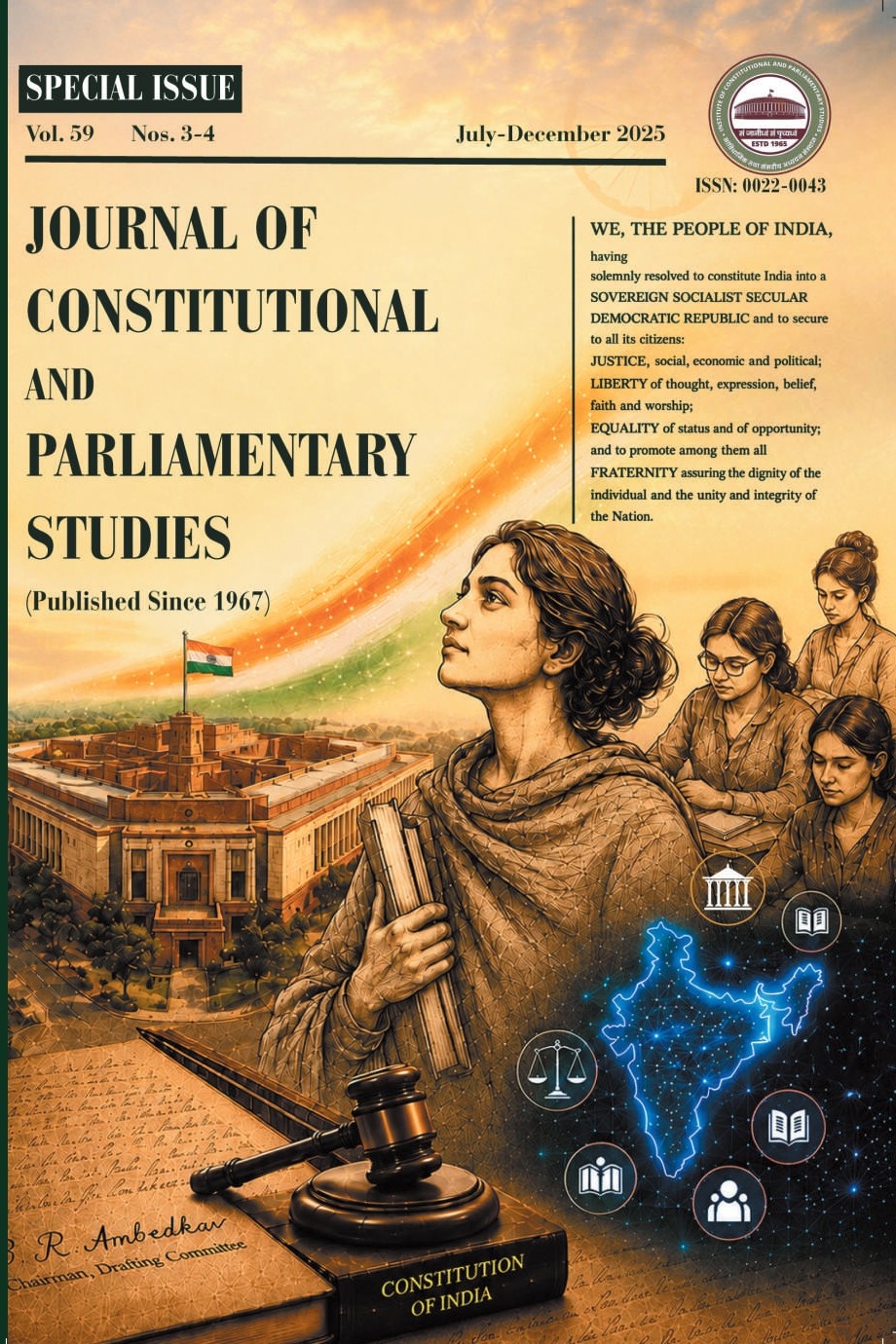



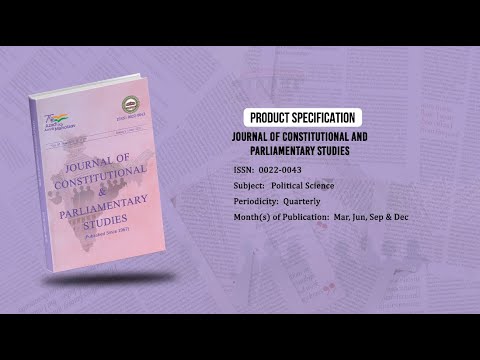
Journal of Constitutional and Parliamentary Studies
Published in Association with Institute of Constitutional and Parliamentary Studies
Current Volume: 59 (2025 )
ISSN: 0022-0043
Periodicity: Quarterly
Month(s) of Publication: March, June, September & December
Subject: Political Science
Gender Stereotypes in Law, Language and Society : From Ancient to Modern India
By : Abhishek Kumar Rai , Chhaya Singh
Page No: 100-111
Abstract
Gender stereotypes have played an important role to shaping the law, language and society in India. In ancient time, texts and traditions gave structured roles to men and women, which also ensured duties, responsibilities and respect within the family and community. These frameworks shaped early social order but also created fixed images of gender. Over time, these ideas entered language, social customs, and legal practices. Law, language and society became the means of creation and continuance of these gender stereotypes. During the colonial period, codified laws often preserved existing patterns. After independence, the Indian Constitution introduced principles of equality, liberty, and dignity, aiming to reduce discrimination and empower women. Today, laws and policies encourage equal participation of women in education, employment, and politics. However, stereotypes continue to appear in legal and institutional practices. This paper studies the journey of gender roles and stereotypes from ancient to modern India, showing how they have changed and how they continue to affect society. It highlights the role of law and language in both preserving and challenging stereotypes. The paper suggests that reforms in law and education can help in creating a more equal and inclusive society.
Authors :
Abhishek Kumar Rai :Research Scholar, Department of Law, Central University of Sikkim, Gangtok.
Chhaya Singh : Research Scholar, Department of Law, University of Lucknow, Lucknow.