


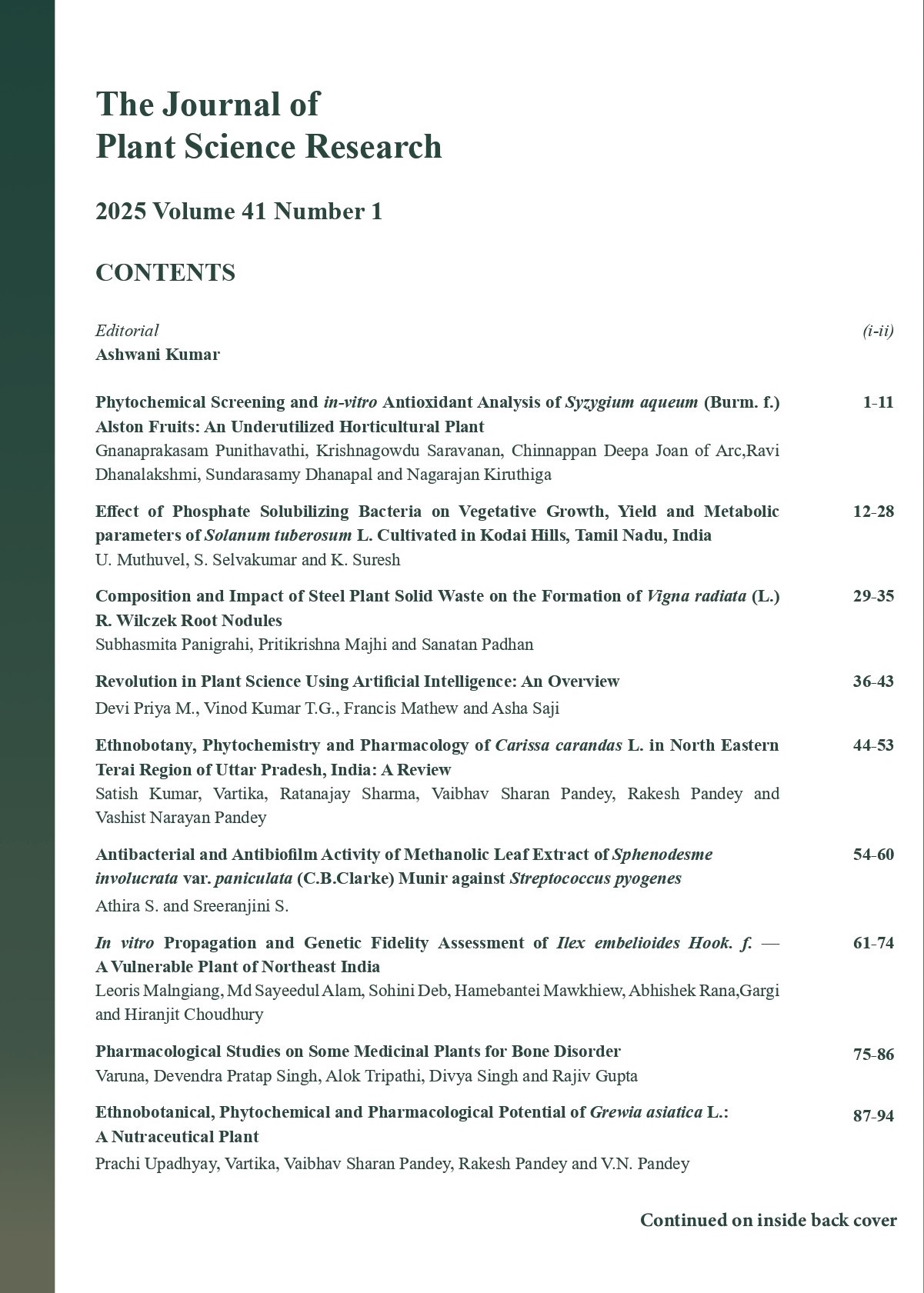


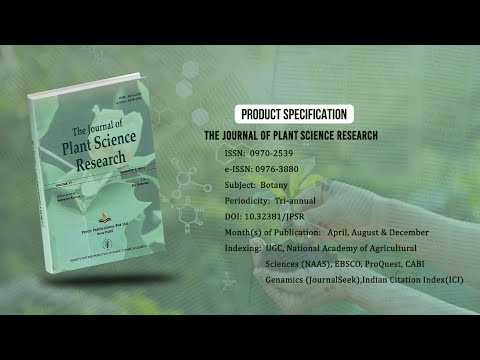
The Journal of Plant Science Research - A UGC Care-Listed Journal
Published in Association with Forum For the Promotion of Plant Science Research
Current Volume: 42 (2026 )
ISSN: 0970-2539
e-ISSN: 0976-3880
Periodicity: Tri-annual
Month(s) of Publication: April, August & December
Subject: Botany
DOI: 10.32381/JPSR
Online Access is Free for Life Member
Assessment of genetic diversity of Diospyros melanoxylon Roxb. (kendu) growing in Jharkhand, India using RAPD markers
By : Amita Kumari , Avinash Kumar
Page No: 23-31
Abstract
Diospyros melanoxylon Roxb. (Family: Ebenaceae), is a native tree of India and Sri Lanka. The species has been used extensively in Indian traditional medicine to treat a variety of diseases including diarrhoea, cholera, dysentery, intermittent fevers, bleeding gums, bronchitis, pneumonia, etc. Commercially, its leaves are used in the manufacture of Indian crude cigarette ‘bidi’. Despite of its medicinal and economic importance the genetic structure of D. melanoxylon has not been elucidated. The present study reports the first attempt of genetic dissection of D. melanoxylon using RAPD (Random Amplified Polymorphic DNA) markers. The nature and extent of genetic diversity of 48 genotypes, collected from 8 districts, growing naturally in different parts of the Jharkhand, were determined. The RAPD fingerprints detected 73.96% polymorphism among 96 genetic loci amplified. The dendrogram thus generated resulted into clustering of populations into population specific groups as well as admixture of populations. The genotypes from West Singhbhum were clustered separately from the other genotypes. The mean value for Shannon’s index (I), Nei’s genetic diversity (h), observed numbers of allele (na), effective numbers of alleles (ne) was 0.3618, 0.2375, 1.7396, and 1.3969, respectively. The calculated gene flow was found to be 1.0776, indicative of a high amount of genetic exchange within the species. The result presented here can be a stepping stone for future researches on the population genetics of this species.
Authors :
Amita Kumari and Avinash Kumar
Department of Botany, Vinoba Bhave University, Hazaribag, Jharkhand, India.
DOI: https://doi.org/10.32381/JPSR.2021.37.01.4