


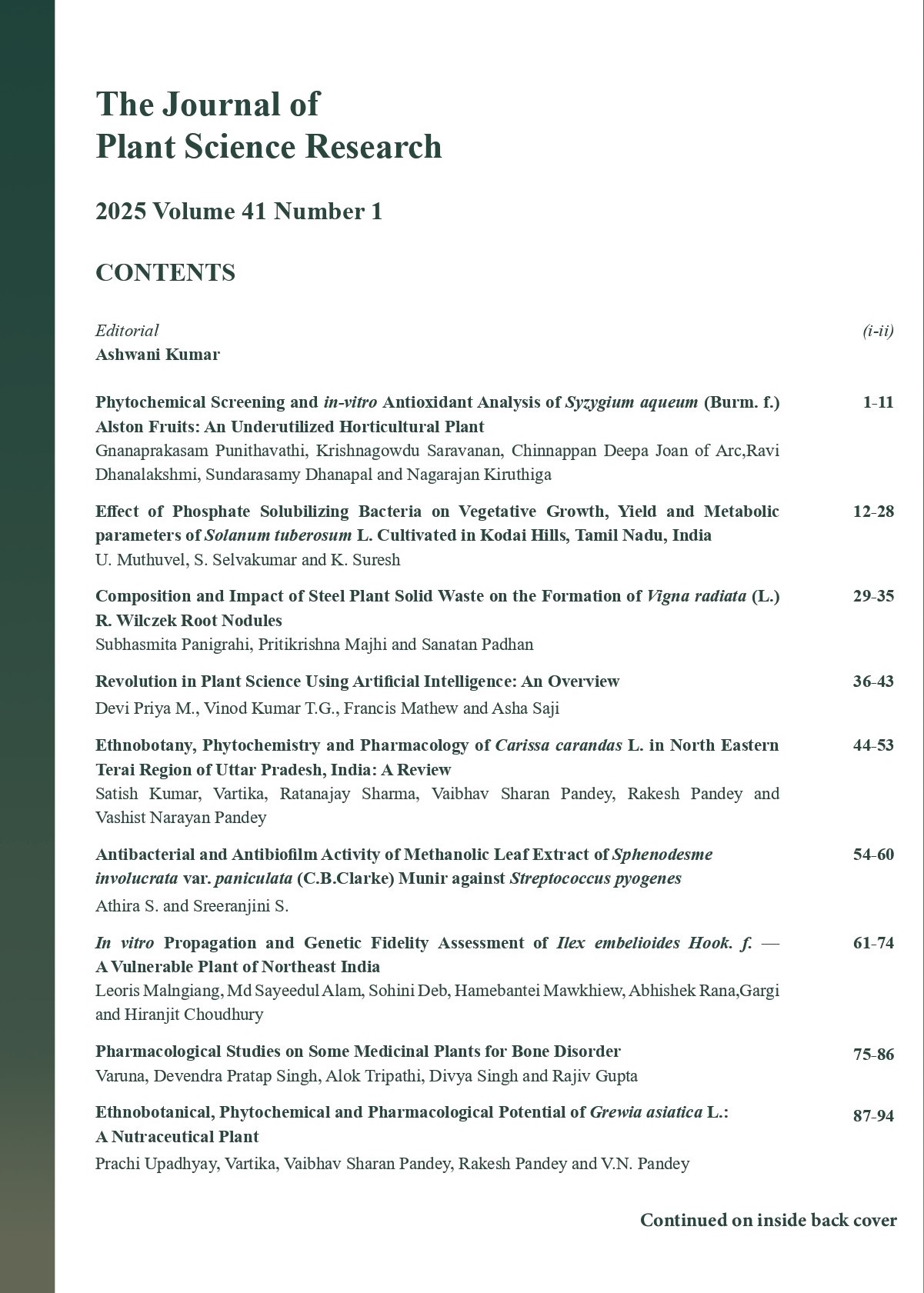


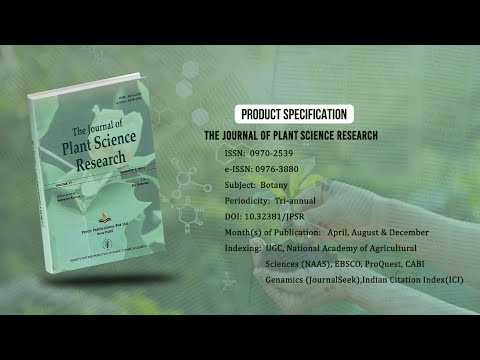
The Journal of Plant Science Research - A UGC Care-Listed Journal
Published in Association with Forum For the Promotion of Plant Science Research
Current Volume: 42 (2026 )
ISSN: 0970-2539
e-ISSN: 0976-3880
Periodicity: Tri-annual
Month(s) of Publication: April, August & December
Subject: Botany
DOI: 10.32381/JPSR
Online Access is Free for Life Member
Application of Trichoderma harzianum as a Biocontrol Agent to Reduce Post Harvest Losses in Tomato
By : Shikha Raj , Shambhu Nath Jha
Page No: 87-94
Abstract
Tomato (Solanum lycopersicum L.) is an important crop in the Indian region of which production is severely affected by the pathogens, particularly Fusarium spp., Botrytis cinerea, and Alternaria alternata, can cause post-harvest losses in tomatoes, a crop that is widely grown in a variety of climatic zones and is considered a nutritionally important crop. These diseases cause mold growth, wilting, and fruit rot, which affects food security and results in large financial losses. Farmers have long used chemical fungicides to protect their crops, but there are significant risks associated with these substances. In addition to putting at risk farmers’ and consumers’ health, they can damage the environment and cause pests to develop resistance over time. Because of these issues, there’s a growing interest in using safer, natural solutions—like biological control methods—as alternatives. The effectiveness of Trichoderma harzianum, which was isolated from Samastipur, Bihar’s rhizosphere soil, as a biocontrol agent against the mentioned pathogens is examined in this study. In vitro tests and dual culture assays revealed that T. harzianum demonstrated strong antagonistic activity, inhibiting Fusarium spp. mycelial growth by up to 88.2 per cent at higher concentrations. It also showed moderate inhibition of Botrytis cinerea and minimal efficacy against Alternaria alternata. Besides controlling diseases, T. harzianum also helped keep tomatoes fresh for longer by maintaining their firmness, vitamin C, and overall quality during storage. This makes it a safe, eco-friendly alternative to chemical fungicides. More research is needed to understand how it works and ensure it’s safe for wider use in sustainable farming.
Authors
Shikha Raj: Research Scholar, Department of Botany, L. N. Mithila University, Darbhanga, Bihar,
Shambhu Nath Jha: Professor and Head, Department of Botany, K. S. R. College, Sarairanjan, Samastipur, Bihar
DOI: https://doi.org/10.32381/JPSR.2026.42.01.9