


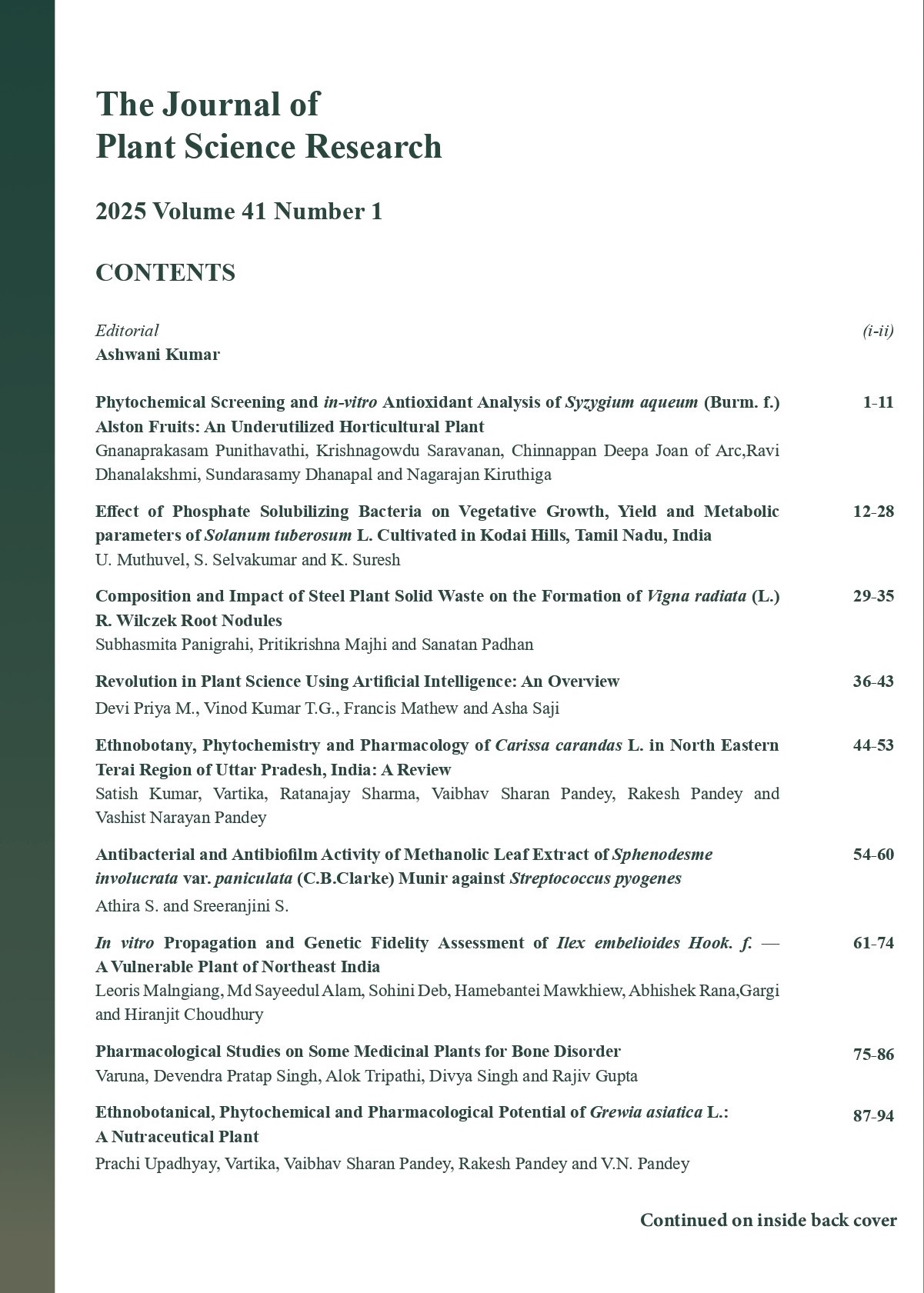


The Journal of Plant Science Research - A UGC Care-Listed Journal
Published in Association with Forum For the Promotion of Plant Science Research
Current Volume: 42 (2026 )
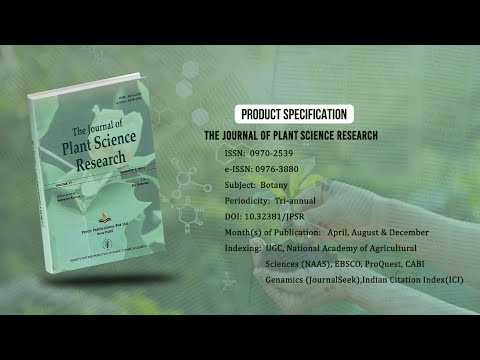
ISSN: 0970-2539
e-ISSN: 0976-3880
Periodicity: Tri-annual
Month(s) of Publication: April, August & December
Subject: Botany
DOI: 10.32381/JPSR
Online Access is Free for Life Member
Bioprocess Optimisation of L-Ornithine Production via Fungal L-Arginase: Evaluating Agro-Waste Substrates in Solid-State and Liquid-State Fermentation
By : Akanksha Khare , Richa Jain
Page No: 24-30
Abstract
L-ornithine is involved in nitrogen metabolism and is found across various sectors. The use of synthetic media and genetically engineered strains poses both economic and environmental constraints. This study explores the use of low-cost, agro-waste-derived substrates for L-ornithine production.
Five high-performing fungal isolates were subjected to comparative fermentation experiments. The enzymatic activity was quantified using established biochemical methods. The results showed that Liquid-State Fermentation (LSF) provided higher output, although certain agro-waste substrates demonstrated competitive activity levels. Notably, rice bran achieved 18.88 U/mL (FI- 3) and 17.85 U/ mL (FI-5) arginase yield in SSF, while specific activity in LSF peaked at 14.51 U/mg (FI-3). Wheat bran showed variable outcomes, but occasionally enhanced specific activity, highlighting isolate-dependent effectiveness. The activity of arginase was influenced by the nature of the substrate, indicating that substrate characteristics significantly impact enzymatic efficiency.
This research demonstrates how agro-waste can be utilised to produce high-value biochemicals. The efficiency of the bioprocess can be further enhanced through the use of naturally adapted fungal strains. By replacing expensive synthetic ingredients with renewable agricultural by- products, this approach holds significant promise for reducing the cost of enzyme production while minimising resource consumption.
The study contributes to the circular economy by showing how agricultural waste can be converted into valuable metabolites. One major benefit is the reduction of waste load. The findings encourage further exploration of fungal biocatalysts and process optimisation strategies for industrial applications. This research highlights the synergy between biotechnological innovation and environmental sustainability.
Authors:
Akanksha Khare: CSRD, People’s University, Bhopal, Madhya Pradesh,
Richa Jain: CSRD, People’s University, Bhopal, Madhya Pradesh,
DOI: https://doi.org/10.32381/JPSR.2026.42.01.3