


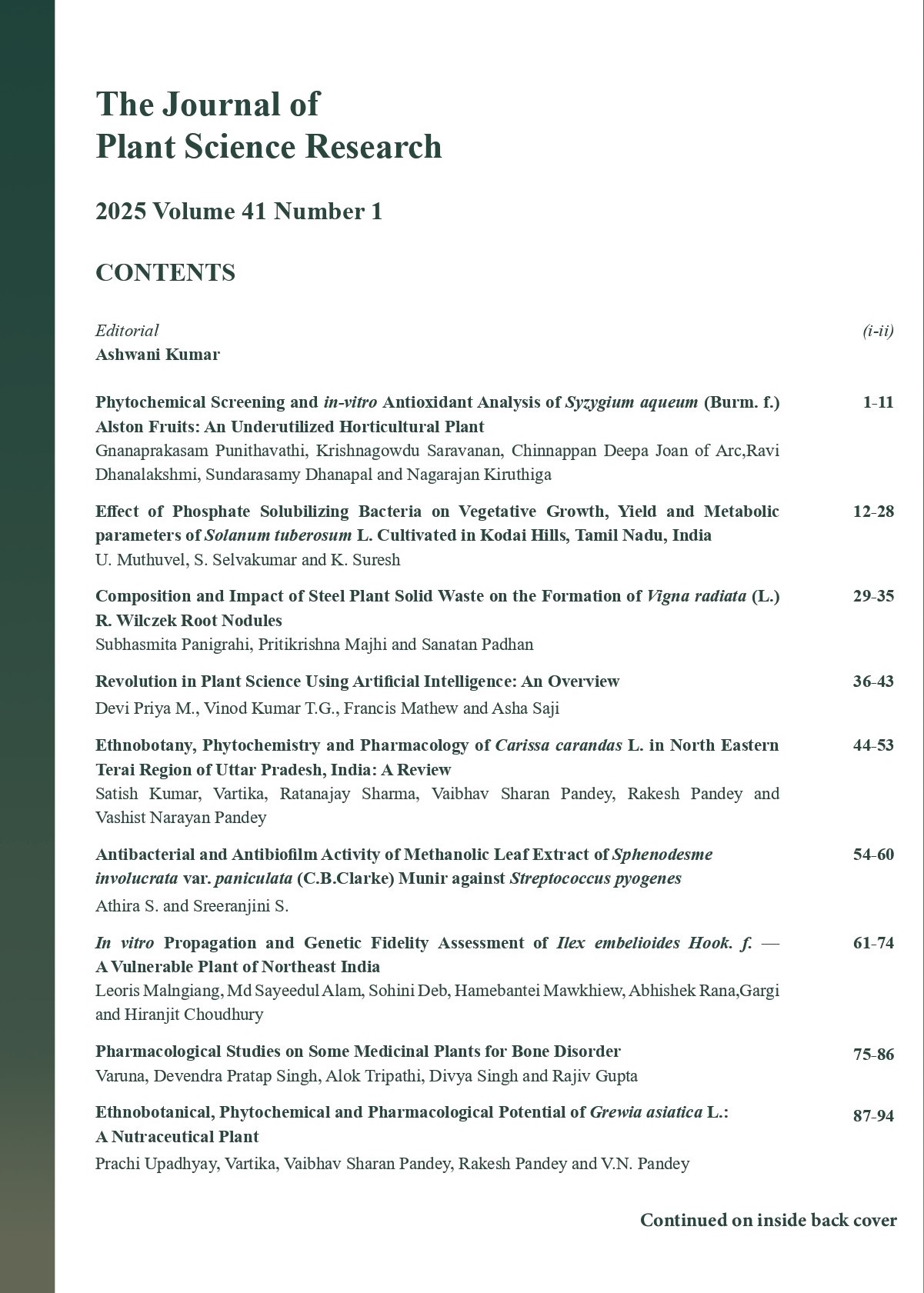


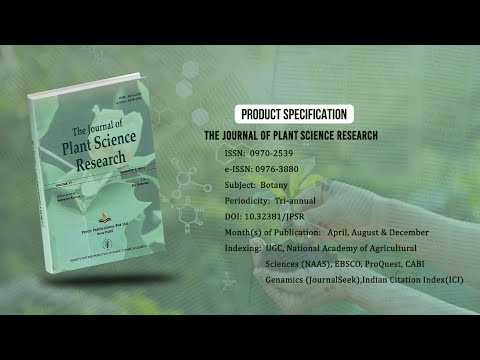
The Journal of Plant Science Research - A UGC Care-Listed Journal
Published in Association with Forum For the Promotion of Plant Science Research
Current Volume: 42 (2026 )
ISSN: 0970-2539
e-ISSN: 0976-3880
Periodicity: Tri-annual
Month(s) of Publication: April, August & December
Subject: Botany
DOI: 10.32381/JPSR
Online Access is Free for Life Member
In silico and Pharmacokinetic Activity of Bioactive Compounds from Syzygium jambos (L.) Alston against Bcl-XL and COX-2: Potential Therapeutic Targets for Neuroblastoma
By : Jennifer Stanley , Shanthi Periyasamy
Page No: 367-379
Abstract
Cancer is a complex disease characterised by uncontrolled cell growth, evasion of apoptosis, and dysregulation of key signaling pathways, necessitating the search for novel therapeutic compounds from natural sources. Objectives: To identify potential inhibitors, present in Syzygium jambos (L.) Alston leaves targeting anti-apoptotic activity and cell cycle regulation, both of which are crucial in neuroblastoma progression. Methods: In this study, molecular authentication of Syzygium jambos leaves was performed through DNA isolation, PCR, and Sequencing. The ethanolic leaf extract was analyzed by UV-vis, FTIR, and GC-MS. Functional compounds from the GC-MS spectrum were docked with Bcl-XL (PDB: 1EVE) and COX2 (PDB: 1CX2) using Autodock Vina. Pharmacokinetic and pharmacodynamic attributes of the chemical compounds were studied by the Swiss ADME tool. Results: The PCR amplification of the rbcL gene yielded a ~600bp fragment and sequencing confirmed the identity of S. jambos (GenBank Accession No. PP754605.1), and phylogenetic analysis revealed a distinct clade closely related to other Syzygium species. Comprehensive analyses using UV spectroscopy, FTIR, and GC-MS identified 15 major bioactive compounds, including anthraquinones, cyclopropane, and silyl derivatives. Docking showed that N-Cinnamoyl-N-(4-methoxyphenyl)-aminomalonic acid, diethyl ester could serve as a potentially active inhibitor against the oncogenic targets Bcl-XL and cyclooxygenase-2, suggesting antiinflammatory potential, with binding affinities of −9.3 kcal/mol for Bcl-XL and −8.7 kcal/mol for 1CX2. Conclusion: These interactions indicate the potential of the compounds as Bcl-XL inhibitors to promote apoptosis and as COX-2 inhibitors for anti-inflammatory effects, highlighting the S. jambos ethanol extract as a promising source of bioactive compounds for neuroblastoma treatment.
Authors
Jennifer Stanley: Research Scholar, PG and Research Department of Botany, Holy Cross College (Affiliated to Bharathidasan University),, Tiruchirappalli, Tamil Nadu, India.
Shanthi Periyasamy: Dean, School of Life Sciences, Associate Professor, PG and Research Department of Botany, Holy Cross College (Affiliated to Bharathidasan University), Tiruchirappalli, Tamil Nadu, India.
DOI: https://doi.org/10.32381/JPSR.2025.41.03.2