


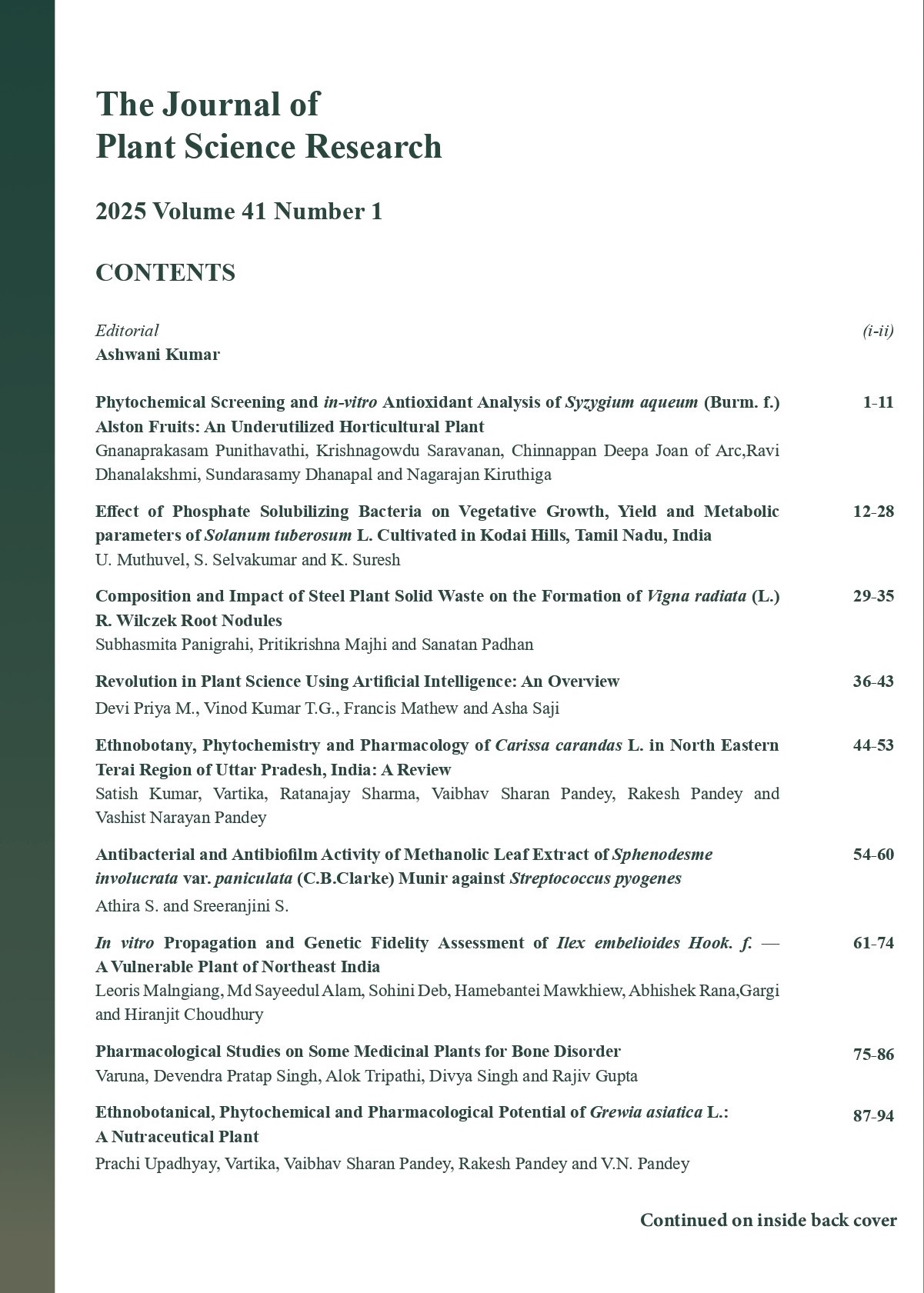


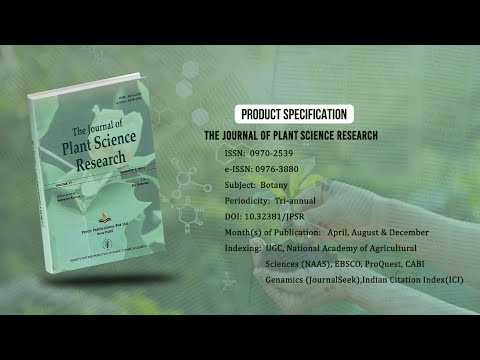
The Journal of Plant Science Research - A UGC Care-Listed Journal
Published in Association with Forum For the Promotion of Plant Science Research
Current Volume: 42 (2026 )
ISSN: 0970-2539
e-ISSN: 0976-3880
Periodicity: Tri-annual
Month(s) of Publication: April, August & December
Subject: Botany
DOI: 10.32381/JPSR
Online Access is Free for Life Member
Extraction Methods for Determining Phycocyanin in Marine Water Cyanobacterium Oscillatoria acuminata
By : Priti Dhamal , Babita Rana
Page No: 110-115
Abstract
This study systematically investigates the efficiency of various extraction methods for isolating phycocyanin from the marine cyanobacterium Oscillatoria acuminata, sourced from the Mumbai region. The identification of Oscillatoria acuminata was confirmed through a combination of morphological and molecular analyses. The extraction techniques evaluated included freeze-thaw, serial extraction, maceration, organic acid-based extraction, and inorganic extraction, with subsequent purification using ammonium sulfate precipitation. Results demonstrated that the extraction method significantly affected the phycocyanin yield and purity. Among the methods tested, freeze-thaw, and maceration emerged as the most effective. Specifically, the freeze-thaw method achieved yields of 40 mg/g (2 cycles, purity ratio 0.5) and 43 mg/g (3 cycles, purity ratio 0.9). The maceration method yielded 38 mg/g of phycocyanin with a purity ratio 0.2. Conversely, organic acid extraction using acetic acid and inorganic acid extraction with HCl resulted in negligible yields, rendering the data from these methods inconsequential. These findings highlight the critical role of freeze-thaw and maceration extraction techniques in optimizing phycocyanin production from Oscillatoria acuminata for large-scale industrial applications.
Authors :
Priti Dhamal : Reseach Scholar, Department of Botany, G. N. Khalsa College, Matunga East, Mumbai, Maharashtra, India.
Babita Rana : Assistant professor, G.N. Khalsa College Matunga East, Mumbai, Maharashtra, India.
DOI: https://doi.org/10.32381/JPSR.2025.41.01.12