




The Journal of Plant Science Research - A UGC Care-Listed Journal
Published in Association with Forum For the Promotion of Plant Science Research
Current Volume: 42 (2026 )
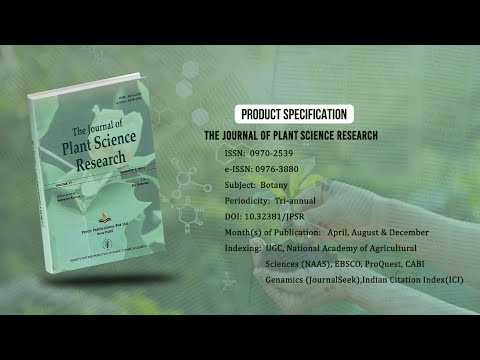
ISSN: 0970-2539
e-ISSN: 0976-3880
Periodicity: Tri-annual
Month(s) of Publication: April, August & December
Subject: Botany
DOI: 10.32381/JPSR
Online Access is Free for Life Member
Responses of Aromatic Rice Cultivars to Induced Drought Stress at Seedling Stages using PEG-6000
By : Sheikh Benazir , Rozina Yendrembam , Kananbala Sarangthem
Page No: 399-410
Abstract
Four local aromatic rice cultivars found in Manipur, India, namely Chakhao poireiton (R001), Chakhao angangba (R002), Chakhao angouba (R003) and Heitup phou (R004) were used to evaluate the responses in morphological, physiological and biochemical parameters under drought stress induced by polyethylene glycol-6000(PEG). The aromatic rice cultivars were subjected to drought stress treatment induced by four different concentrations of polyethylene glycol-6000 (0%, 10%, 15% and 20%). The results showed that the root and shoot lengths, fresh and dry weight of root and shoot, and total chlorophyll content, chlorophyll a, chlorophyll b Relative Water Content (RWC) were decreased under drought stress treatment. The activities of peroxidase (POD), catalase (CAT), superoxide dismutase (SOD), free amino acid content, proline, total soluble sugar and phenol content increased but the soluble protein content was found to be significantly decreased in R002 and R003 cultivars from 15% to 20% of PEG induced drought stress condition. Hence, from the present study it was observed that Heitup phou and Chakhao poireiton were comparatively tolerant and showed better performance in all the considered parameters as opposed to the control check cultivars (Sahbhagi dhan) while Chakhao angangba and Chakhao angougba were more sensitive to drought stress.
Authors :
Sheikh Benazir , Rozina Yendrembam and Kananbala Sarangthem
Plant Physiology Section, Department of Life Sciences (Botany), Manipur University, Manipur, India.
DOI: https://doi.org/10.32381/JPSR.2024.40.03.6