




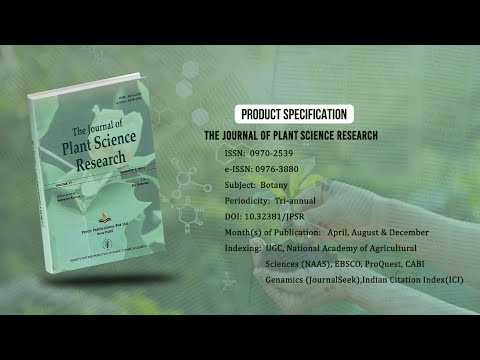
The Journal of Plant Science Research - A UGC Care-Listed Journal
Published in Association with Forum For the Promotion of Plant Science Research
Current Volume: 42 (2026 )
ISSN: 0970-2539
e-ISSN: 0976-3880
Periodicity: Tri-annual
Month(s) of Publication: April, August & December
Subject: Botany
DOI: 10.32381/JPSR
Online Access is Free for Life Member
The Phytochemical Profile of Medicinal Plants Cultivated Hydroponically: A Potential Tool to Revolutionise the Health Sector
By : Shital Chaukhande , Mangesh Dagawal
Page No: 270-288
Abstract
This paper aims to review the potential of hydroponics to improve phytochemical content of medicinal plants. The range of bioactive substances found in medicinal plants that support their therapeutic qualities is referred to as their phytochemical profile. There is a vast array of phytochemicals found in medicinal plants, depending on the type of plant and the hydroponic system employed; different hydroponic culture techniques will have different effects on the phytochemical profile of medicinal plants. Due to the regulated atmosphere and nutrient delivery in hydroponics, a medicinal plant grown in this method may have a different phytochemical profile than a plant grown in a standard soil-based system. When medicinal plant cultivated hydroponically, certain plants may display improved or changed phytochemical profiles, while others might not differ significantly from soil-based plants. Understanding the effects of hydroponics on a plant’s phytochemical content and therapeutic qualities typically requires research and experimenting with the particular plant of interest. The purpose of this review is to present an overview of the field’s existing cultivating technology and show how modern hydroponic techniques may be used to cultivate a finished product with a high concentration of specific metabolites, substantial nutritional value, and consistent and uniform quality. Although there is currently little research on this subject, it will undoubtedly grow in the future. As a result, this evaluation offers all the information required for similar future research.
Authors:
Shital Chaukhande : Research Student, Department of Botany, Smt Radhabai Sarda Arts, Commerce and Science College, Anjangaon Surji, Maharashtra, India
Mangesh Dagawal : Associate Professor and Head, Department of Botany, Smt Radhabai Sarda Arts, Commerce and Science College, Anjangaon Surji, Maharashtra, India.
DOI: https://doi.org/10.32381/JPSR.2024.40.02.8