


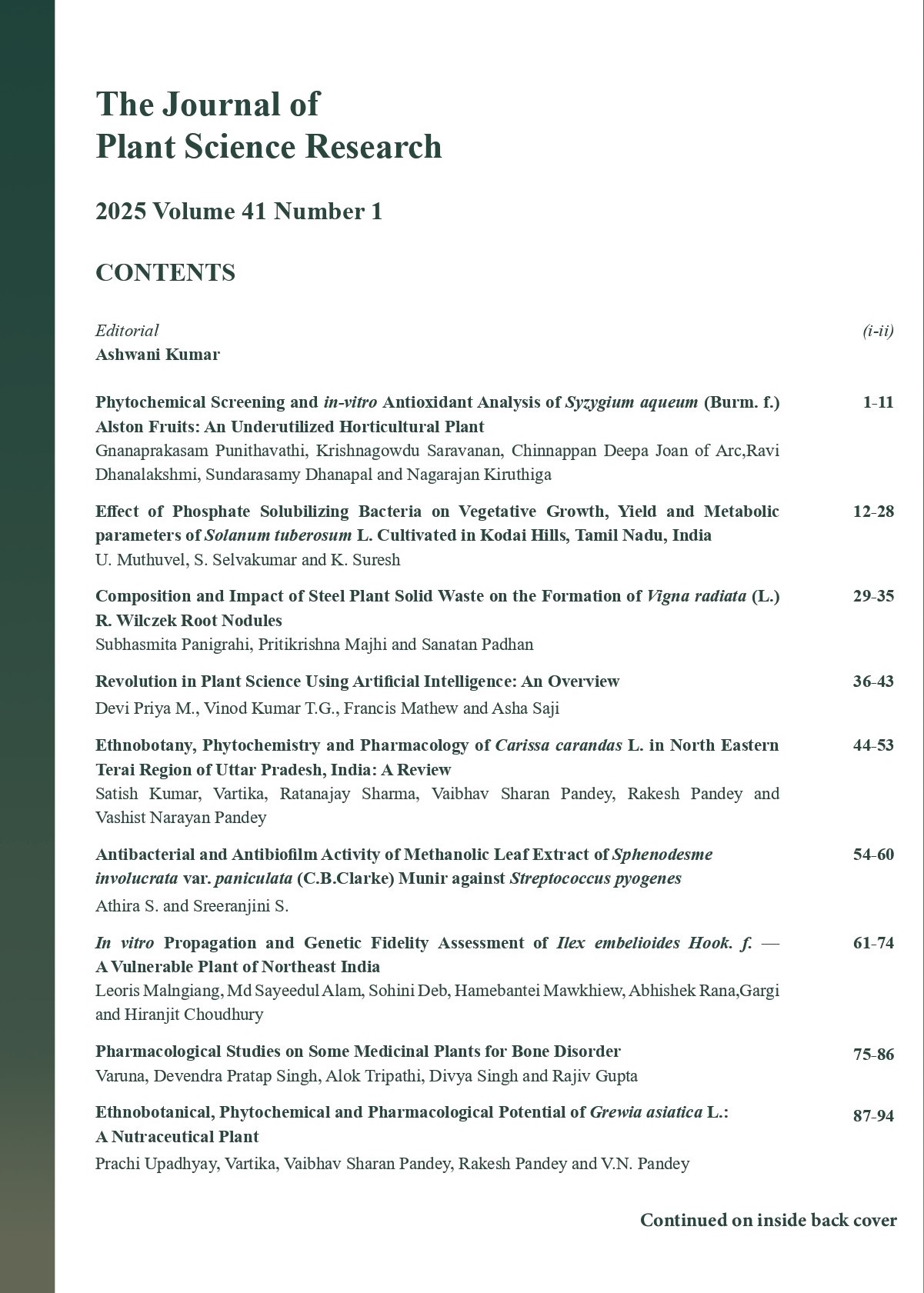


The Journal of Plant Science Research - A UGC Care-Listed Journal
Published in Association with Forum For the Promotion of Plant Science Research
Current Volume: 42 (2026 )
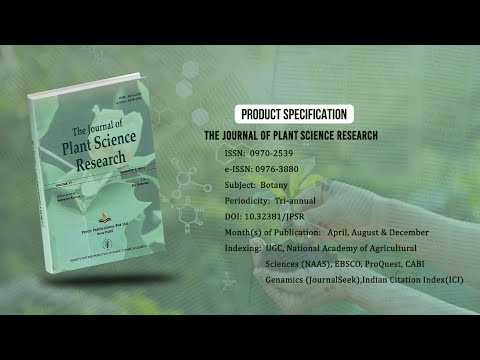
ISSN: 0970-2539
e-ISSN: 0976-3880
Periodicity: Tri-annual
Month(s) of Publication: April, August & December
Subject: Botany
DOI: 10.32381/JPSR
Online Access is Free for Life Member
Exploring the Phytochemical and Pharmacological Properties of Stinging Nettle (Urtica dioica L.): A Wild Edible Plant of Chamba District, Himachal Pradesh
By : Sumit , Gulshan Kumar , Sumit Singh
Page No: 145-154
Abstract
Urtica dioica L., commonly known as ‘stinging nettle’ is a wild edible Himalayan plant species that belongs to the family Urticaceae. This perennial herb grows in some pockets of Chamba district at an average elevation of 1900 to 2800 m and is locally called as ‘Ain’. The plant is used as great source of vegetable, fodder and herbal medicine. U. dioica L. cause skin irritation and itching when touched due to chemical compounds like acetylcholine, 5-hydroxy tryptamine, formic acid and histamine in the glandular hairs present on leaves and stem of the plant. The main objective of this study is to provide comprehensive information about phytochemistry and pharmacological aspects of U. dioica L. to strengthen traditional knowledge of native communities. The literature survey on U. dioica L. has been compiled from various sources such as scientific database-Google Scholar, regional floras and other published research articles. Kingsdraw chemical structure editor software has been used to depict the chemical structure of various compounds present in U. dioica L. such as phytosterols, flavonoids, tannins, proteins, amino acids and fatty acids.
Authors :
Sumit : Department of Botany, Govt. College Chamba, Himachal Pradesh, India.
Gulshan Kumar : Department of Botany, Career Point University, Hamirpur, Himachal Pradesh, India
Sumit Singh : Agrotechnology and Rural Development Division, CSIR-North-East Institute of Science and Technology, Jorhat, Assam, India
DOI: https://doi.org/10.32381/JPSR.2023.39.03.15