


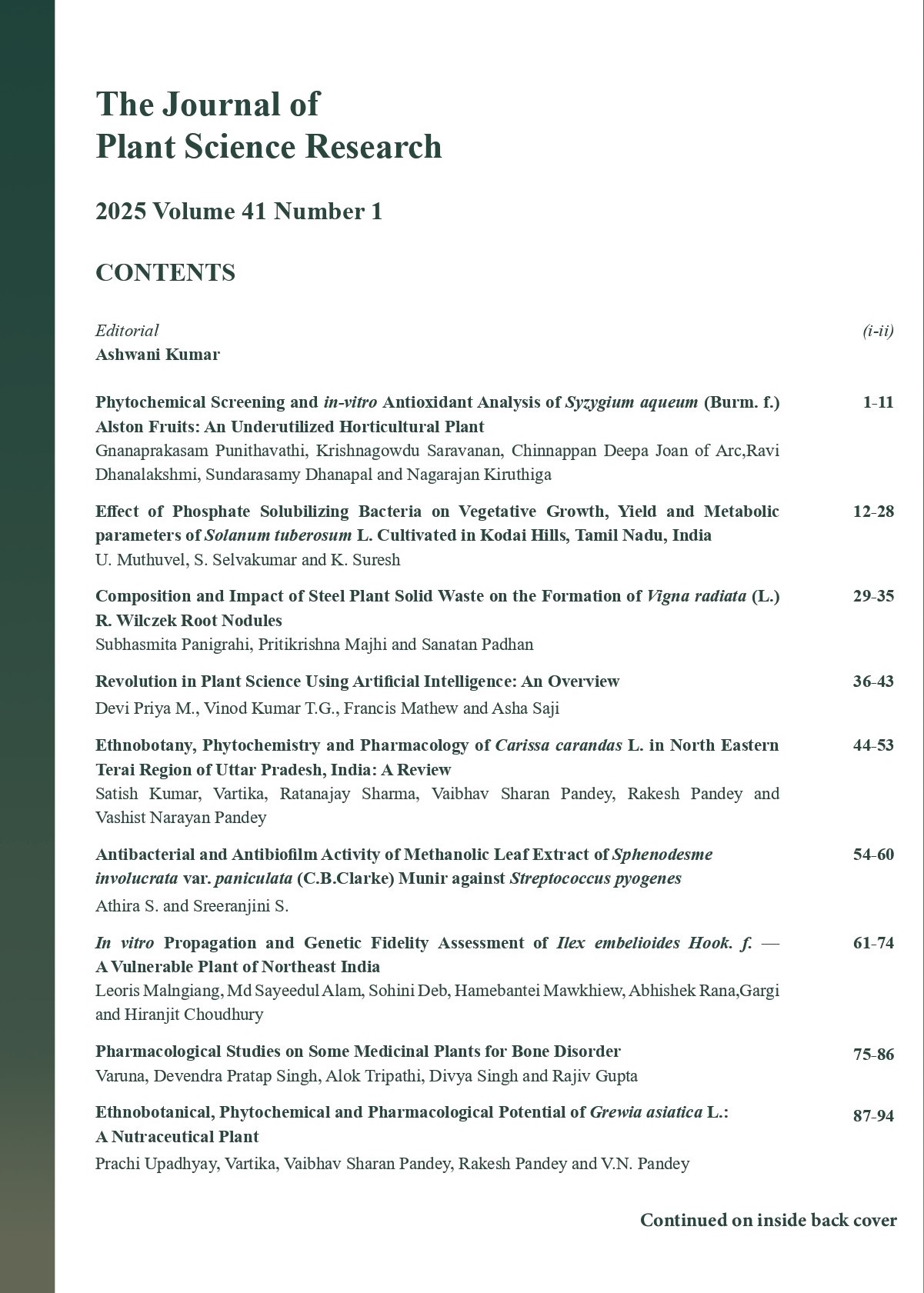


The Journal of Plant Science Research - A UGC Care-Listed Journal
Published in Association with Forum For the Promotion of Plant Science Research
Current Volume: 42 (2026 )
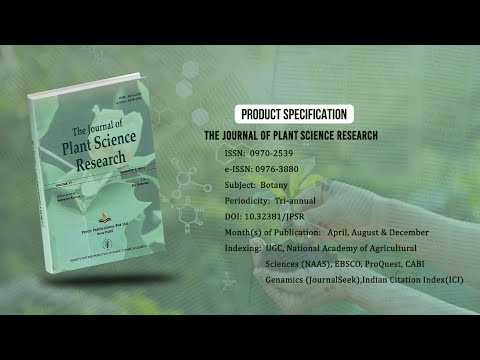
ISSN: 0970-2539
e-ISSN: 0976-3880
Periodicity: Tri-annual
Month(s) of Publication: April, August & December
Subject: Botany
DOI: 10.32381/JPSR
Online Access is Free for Life Member
Plant Growth Promoting Rhizobacteria and their Roles as Fungal Biocontrol Agents: An Overview
By : Deepmala Katiyar , A. Hemantaranjan , P. Dwivedi
Page No: 127-136
Abstract
In the last couple of decades, plant growth promoting rhizobacteria (PGPR) have been increased with impressive enthusiasm to examine growth, development and yield potentiality of crop plants being less destructive to nature and cutting short the cost of certain composts. Pathogenic fungus affecting plant health is a major and incessant threat to crop production and ecosystem unwavering worldwide. Agricultural production has been strengthened over the past few years, even though producers became more and more dependent on fungicides supportive of crop protection for the obvious reason of monetary stability and livelihood. Besides this, fungicides cause harmful effects on environment ultimately damaging plant health; its use needs to be reduced. Different groups of microorganism in soil have been identified compatible to improve physiological processes at different phenological stages and ultimately benefiting crops for optimizing their potential in several ways. These microorganisms are colonized in roots or rhizospheric soil and are alluded as plant growth promoting rhizobacteria due to its involvement in a variety of plant growth promoting mechanisms consisting of the mobilization of soil compounds (phosphorous and metals), the protection of plants under stressful conditions for counteracting the negative impacts of stress, making them available for the plant to be used as nutrients (nitrogen fixation; phosphate solubilization), siderophore production, defense against phytopathogens, reducing plant diseases by producing antibiotics and HCN, phytohormones (indole 3-acetic acid, cytokinin and gibberellin) production and so on. Utilization of plant rhizobacteria for agricultural advantages has increased its overall significance. The insights developed are crucial for extending relevant researches extensively in the requisite section of biocontrol for enhanced crop production. Therefore, based on recognized roles of PGPR, this has been thoughtfully considered as one of the vital areas of crop improvement programme under normal or stressful condition.
Authors :
Deepmala Katiyar, A. Hemantaranjan and P. Dwivedi : Department of Plant Physiology, Institute of Agricultural Sciences, Banaras Hindu University, Varanasi 221 005, India.