


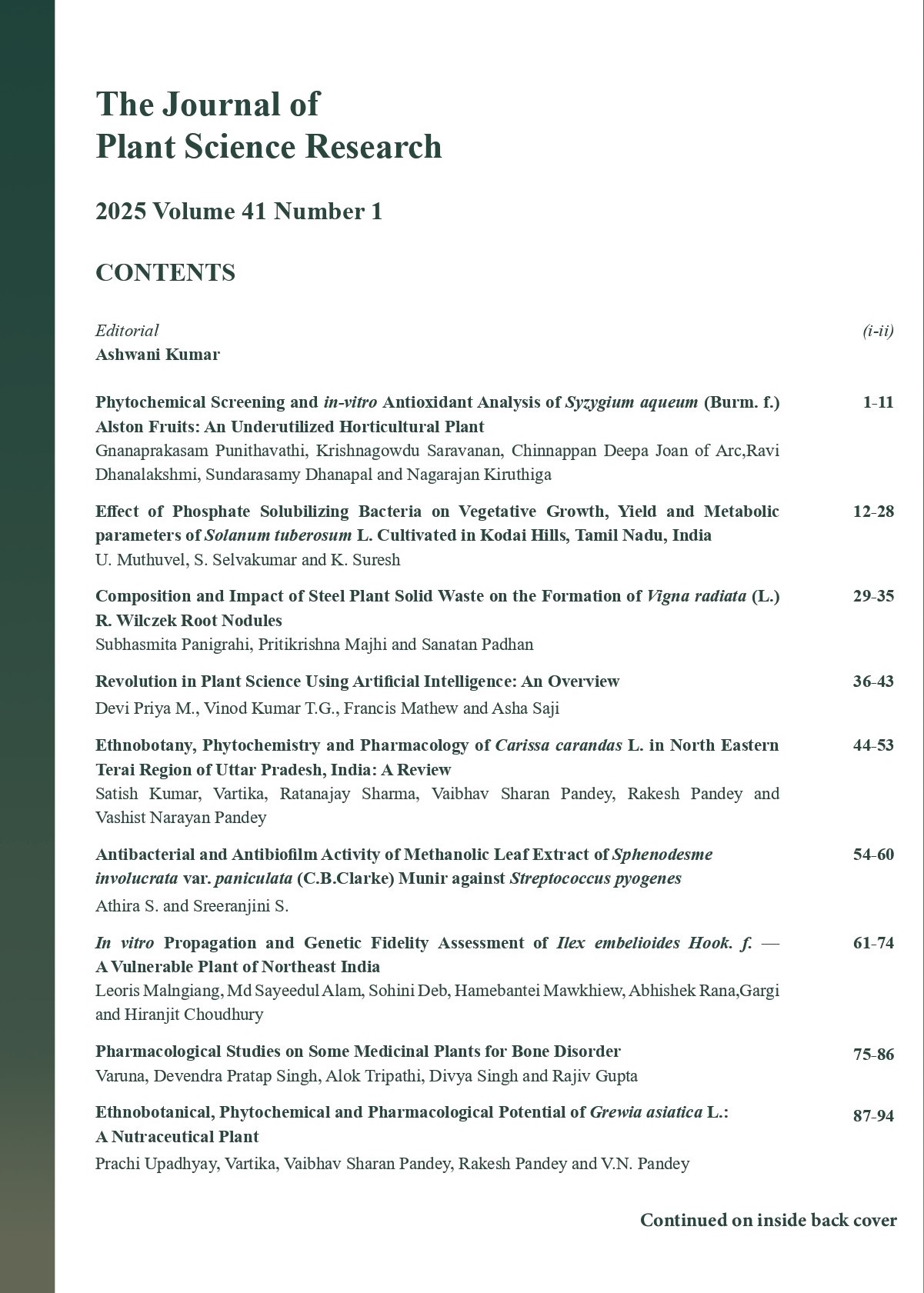


The Journal of Plant Science Research - A UGC Care-Listed Journal
Published in Association with Forum For the Promotion of Plant Science Research
Current Volume: 42 (2026 )
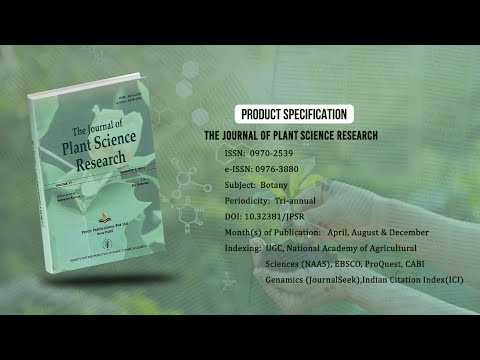
ISSN: 0970-2539
e-ISSN: 0976-3880
Periodicity: Tri-annual
Month(s) of Publication: April, August & December
Subject: Botany
DOI: 10.32381/JPSR
Online Access is Free for Life Member
Jasmonates: An Emerging Approach in Biotic and Abiotic Stress Tolerance
By : Shivani Lalotra , Akhouri Hemantaranjan , Sanam Kumari , Bhudeo Rana Yashu
Page No: 29-39
Abstract :
Plant hormones acts as key signaling compounds in plant stress responses and development under biotic and abiotic stresses. The potential roles of novel phytohormones like Jasmonates had been considered so far and copious investigation is going on in finding the impending role of jasmonates in abiotic and biotic stresses. In the list of known classical plant hormones, jasmonates, [jasmonic acid and its methyl ester (methyl jasmonates)] shown as potential tool in enhancing tolerance of plants against various physiological processes. These oxidized lipids (oxylipins) mainly derived from ?linolenic acids (?-LAs), plays an active role in senescence, flower nectar secretion, G-protein signaling, and development in plants. Exogenous application of jasmonates on different plant parts have proved effective in improving plant abiotic stress tolerance particularly salinity, drought, and temperature (low/high) conditions and also in biotic stress tolerance like pathogen attack or wounding by production of defensive secondary metabolites, through the stimulation of phenyl-propanoid metabolism resulted from accumulation of JA in plant cells or tissues. Based on this prolific role of jasmonates and its derivatives in different fields of biological sciences these phytohormones have opened new vistas and increasing interest in future Agricultural, Biotechnological and Physiological researches.
Authors :
Shivani Lalotra, Akhouri Hemantaranjan, Sanam Kumari and Bhudeo Rana Yashu
Department of Plant Physiology, Institute of Agricultural Sciences, Banaras Hindu University, Varanasi, India, 221005
DOI: https://doi.org/10.32381/JPSR.2020.36.1-2.4