


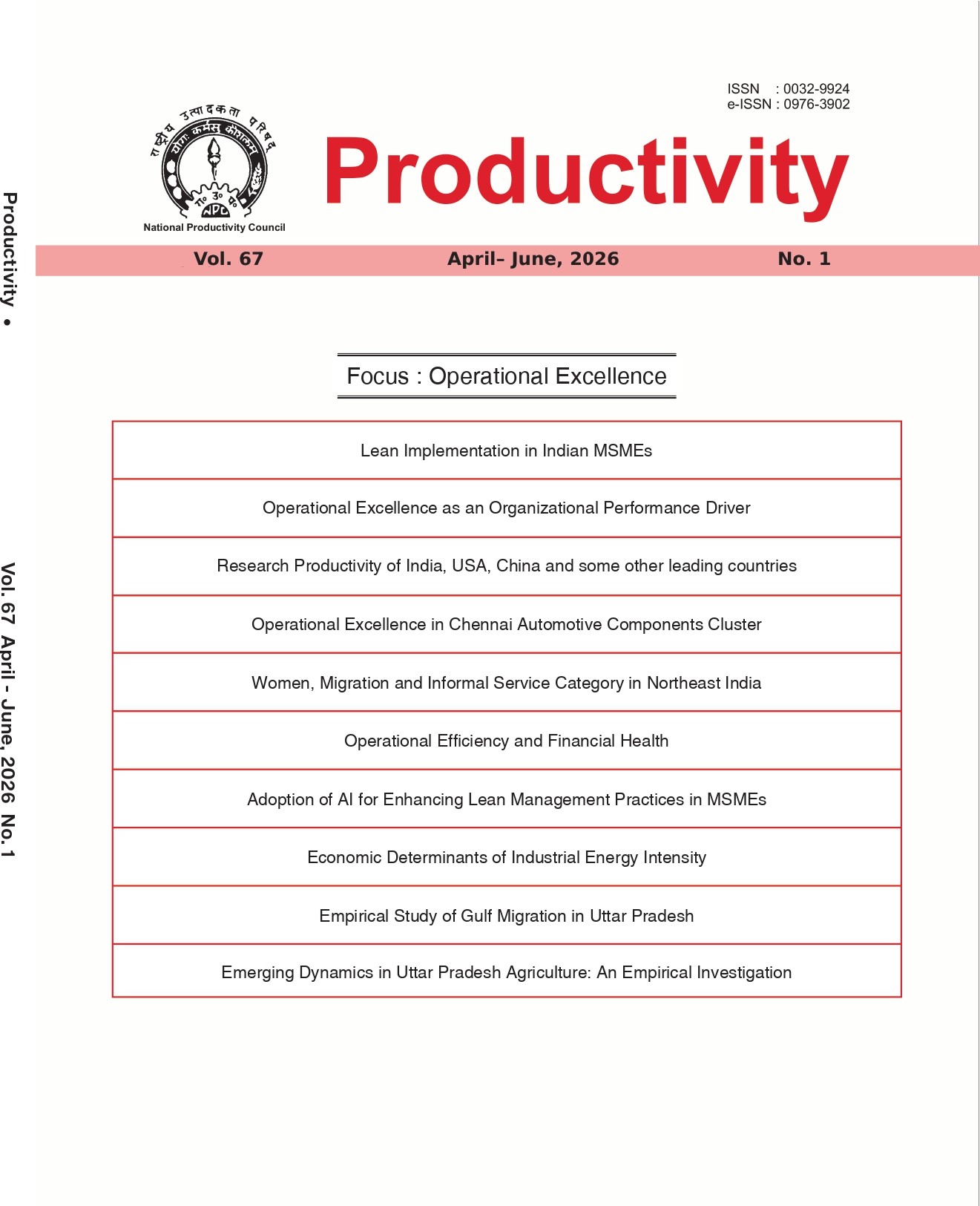

Productivity : A Quarterly Journal of The National Productivity Council
Published in Association with National Productivity Council
Current Volume: 67 (2026-2027 )
ISSN: 0032-9924
e-ISSN: 0976-3902
Periodicity: Quarterly
Month(s) of Publication: June, September, December & March
Subject: Economics
DOI: 10.32381/PROD
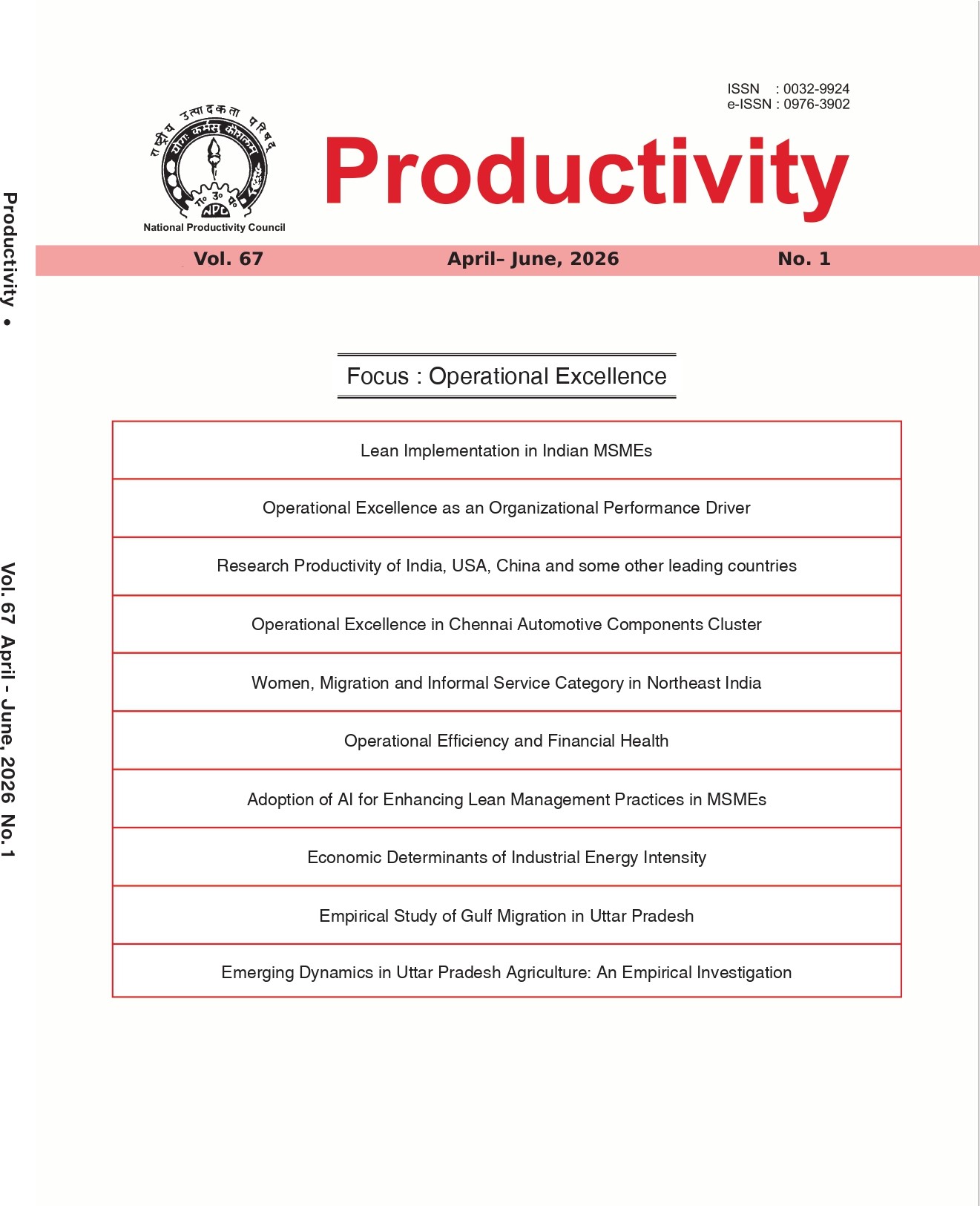
Women, Migration and Informal Service Category in North East India: A Systematic Review
By : Juthika Konwar , Nilanjana Chakrabarty
Page No: 91-103
The women migrant workers in India who fall under the informal service sector are normally exposed to negative socio-economic conditions that make them extremely vulnerable to exploitation. The life patterns of these women are characterised by low living standards, insecure low-paying work, low savings, and limited access to formal social security benefits, including health care insurance, pension benefits, and maternity protection. Consequently, these women are rendered economically insecure and vulnerable. Another problem arises from a lack of knowledge about labour rights and government-provided welfare services, making it difficult for them to benefit from these services to protect them. Besides economic insecurity, women migrant workers are confronted with the double burden of earning a living and managing domestic duties. The lack of adequate childcare services aggravates this problem, causing them additional stress and limiting their ability to benefit from secure or better employment opportunities. The existing literature on the informal economy in India has consistently highlighted the existence of gender disparities, particularly in connection with wage determination and job security. However, in comparison to their male counterparts, women are often paid lower wages and are also more likely to be engaged in informal arrangements that are not in writing and do not provide employment security. When these factors are taken together, it becomes evident that women migrant workers are structurally disadvantaged compared to men. Based on the above discussion, this study conducts a systematic literature review (SLR) to critically examine the conditions of women migrant workers in the unorganised service sector in terms of socio-economic aspects, with a special focus on North East India.
Authors
Juthika Konwar, Associate Professor, Dept of Business Administration, Assam University, Silchar, Assam, India.
Nilanjana Chakrabarty, Assistant Professor, Dept of Business Administration, Assam University, Silchar, Assam, India.
DOI: 10.32381/PROD.2026.67.01.08