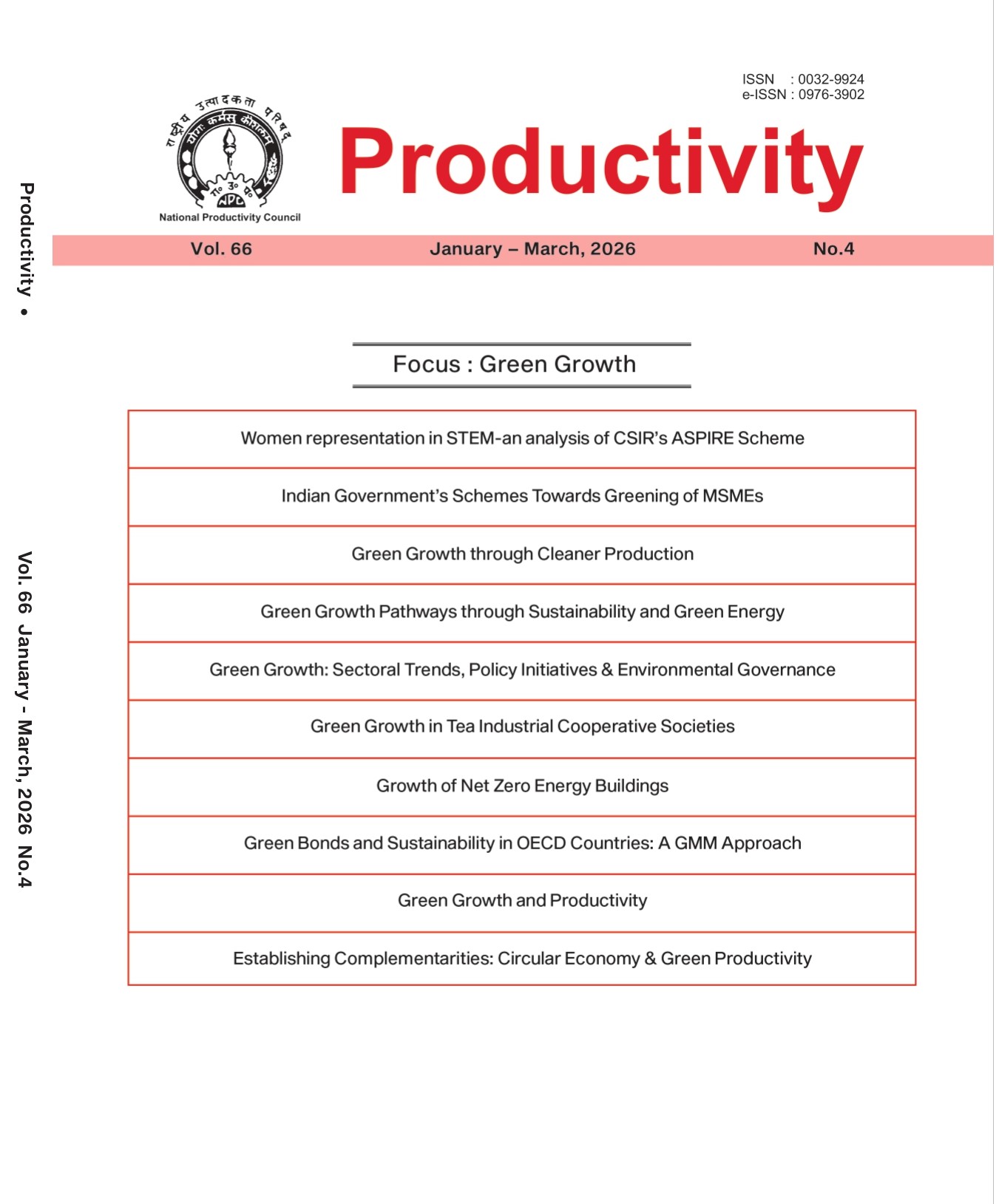



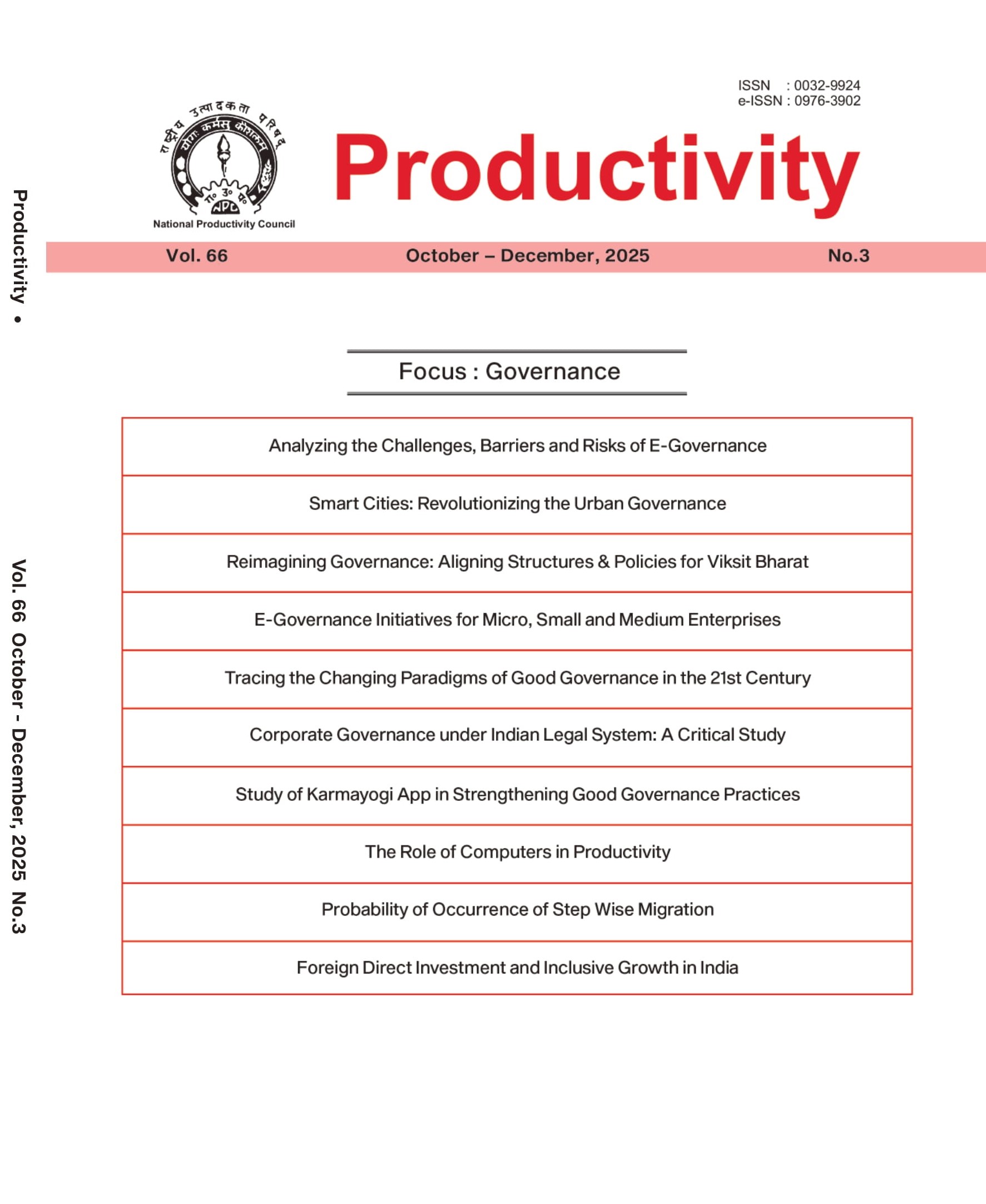

Productivity : A Quarterly Journal of The National Productivity Council
Published in Association with National Productivity Council
Current Volume: 66 (2025-2026 )
ISSN: 0032-9924
e-ISSN: 0976-3902
Periodicity: Quarterly
Month(s) of Publication: June, September, December & March
Subject: Economics
DOI: 10.32381/PROD
The COVID-19 Pandemic and Autonomous Investment in India: A Keynesian Perspective
By : Karuna Shanker Kanaujiya , Abhishek Singh
Page No: 218-228
Abstract
The impact of the COVID-19 pandemic has been evident in macroeconomic performance indicators globally. With the adoption of lockdown measures varying in duration across nations, economic activity experienced a downturn reminiscent of the Great Depression of the 1930s. At the time, Keynes’ effective demand model accentuated the importance of using expansionary fiscal and monetary policy. So, the public sector plays a significant role when an economy faces a crisis. We can easily comprehend the status and role of the public sector during the pandemic, particularly in terms of health, security and policing. A state of lockdown during the pandemic led to widespread job losses, business closures, and supply chain disruptions, which had severe economic consequences. This study highlights the potential of the effective demand theory in addressing the uncertainties brought about by the pandemic, particularly in India, while advocating for amplified government participation. In addition, the study also aligns with the Keynesian approach of robust government intervention to mitigate the repercussions of the pandemic and underscores the pivotal role of the public sector in navigating through the crisis.
Authors :
Karuna Shanker Kanaujiya : Assistant Professor, Department of Applied Economics, Faculty of Commerce, University of Lucknow, Lucknow, India.
Abhishek Singh : Research Scholar (ICSSR Doctoral Fellow), Department of Applied Economics, University of Lucknow, Lucknow, India.
DOI: https://doi.org/10.32381/PROD.2024.65.02.10