




National Security
Published in Association with Vivekananda International Foundation
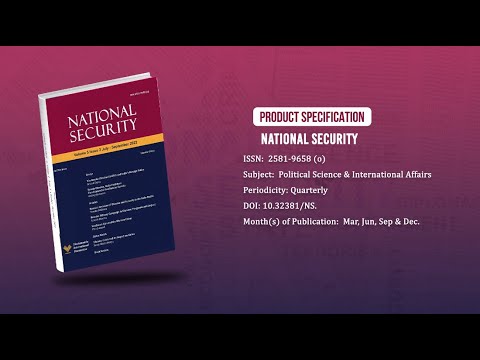
Current Volume: 9 (2026 )
e-ISSN: 2581-9658
Periodicity: Quarterly
Month(s) of Publication: Mar, Jun, Sep & Dec
Subject: Political Science & International Affairs
DOI: 10.32381/NS
Online access is free for the Research Faculty of VIF
Article
India’s Energy Transition: The Case for Hydropower
By : PK Khup Hangzo
Page No: 198-214
Abstract
In India, solar and wind have emerged as key components of the country’s strategy for a clean energy future. Although hydropower has historically been the main source of clean and renewable energy in the country, it currently lags solar and wind in terms of deployment. Nonetheless, hydropower has a critical role in hastening India’s clean energy transition and climate change mitigation efforts. Hydropower’s ability to integrate large shares of variable and intermittent renewable energy sources, such as solar and wind, in the country’s electricity system is increasingly important as their penetrations increase. Hydropower installations also provide crucial services like water supply, irrigation, flood protection, and drought mitigation, navigation, tourism, and recreation. Beyond this, it also serves strategic purposes. By alleviating the socio-economic conditions of border villages and communities in the India-Tibetan border regions such as Arunachal Pradesh, hydropower projects can help India consolidate its administration in the remote border regions, and strengthen its security and defence preparedness. However, such projects are inherently challenging and can have adverse environmental and social impacts. But these can be mitigated by adopting new social and environmental safeguards and more robust and cost-effective technological solutions.
Author :
PK Khup Hangzo is an Associate Fellow at the Vivekananda International Foundation (VIF). Prior to joining VIF, he was an Associate Research Fellow at the Centre for Non-Traditional Security (NTS) at the S. Rajaratnam School of International Studies (RSIS), Singapore. His research interests include India’s border security, the resource dimensions of territorial disputes, and the national security implications of climate change.