




National Security
Published in Association with Vivekananda International Foundation
Current Volume: 9 (2026 )
e-ISSN: 2581-9658
Periodicity: Quarterly
Month(s) of Publication: Mar, Jun, Sep & Dec
Subject: Political Science & International Affairs
DOI: 10.32381/NS
Online access is free for the Research Faculty of VIF
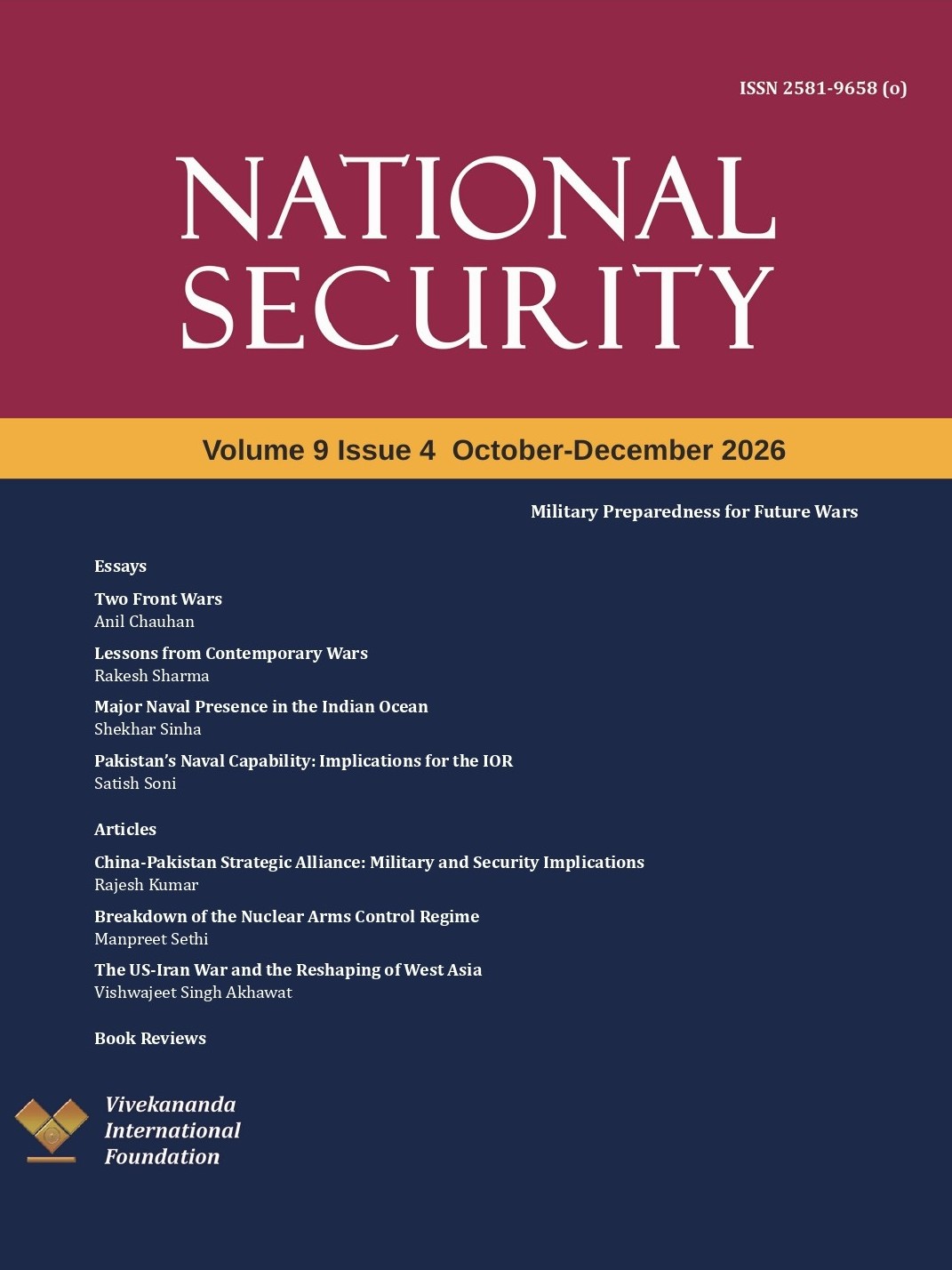
The US-Iran War and the Reshaping of West Asia
By : Vishwajeet Singh Akhawat
Page No: 584-604
Abstract
The article examines US policy towards Iran up until the Iran War and analyses the change in policy under President Trump and its implications. It argues that since the Central Intelligence Agency (CIA)-backed coup of 1953, which removed democratically elected Prime Minister Mohammad Mosaddegh from power, the United States (US) policy has been consistent in seeking to undermine Iranian sovereignty and limit its regional influence. In the post-revolutionary period, the policy took an overt, confrontational approach with containment of Iran at its core. The Trump Administration shifted from a policy of containment to rollback by imposing maximum pressure, which Washington assumed would lead to eventual regime change. However, the war emerged from a significant misreading of Iranian resilience. Instead of regime change, the conflict has consolidated the hold of the Islamic Revolutionary Guard Corps (IRGC) over the Iranian state and created a rally-around-the-flag effect within the society. The Strait of Hormuz has emerged as Iran’s primary strategic leverage after the war, while deepening the divide within the Gulf countries over how to deal with an emboldened Iran.
Author
Dr. Vishwajeet Singh Akhawat is a Research Associate at VIF. His research focuses on West Asian geopolitics, Iranian security and foreign policy, and US role in West Asia.
DOI: http://doi.org/10.32381/NS.2026.09.04.7