



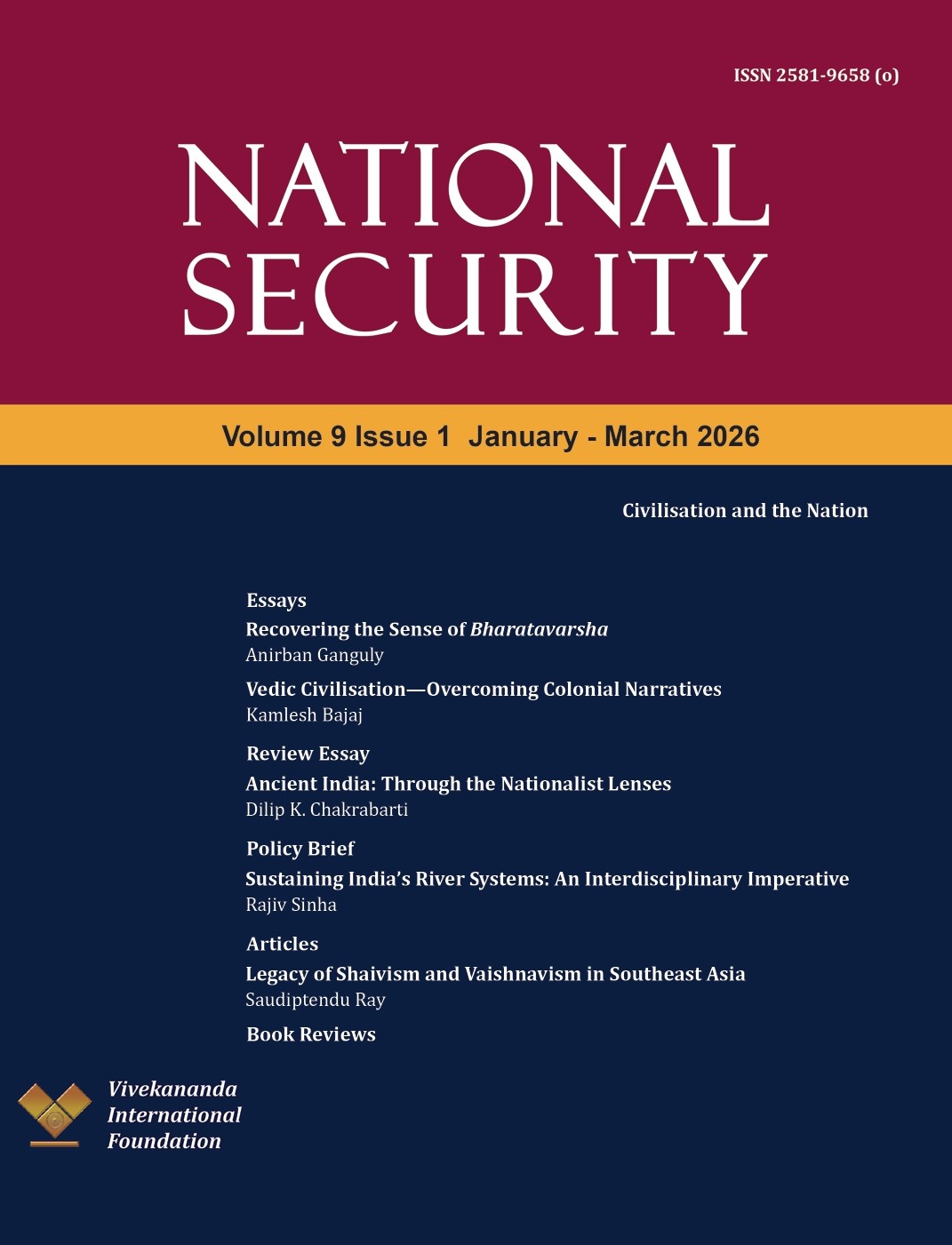

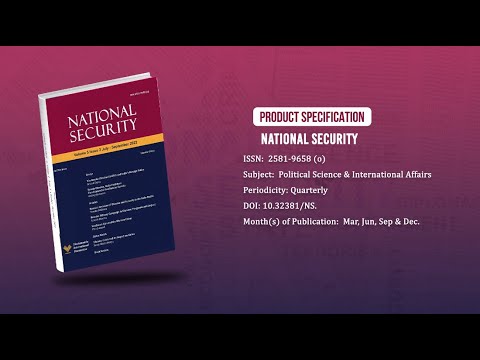
National Security
Published in Association with Vivekananda International Foundation
Current Volume: 9 (2026 )
e-ISSN: 2581-9658
Periodicity: Quarterly
Month(s) of Publication: Mar, Jun, Sep & Dec
Subject: Political Science & International Affairs
DOI: 10.32381/NS
Online access is free for the Research Faculty of VIF
Nuclear Power in the Vanguard of India’s Energy Transition
By : R. Ramachandran
Page No: 388-408
Abstract:
India’s transition to a low-carbon economy necessitates a substantial increase in reliable, clean and dispatchable electricity generation. This article examines nuclear power’s role in India’s energy transition against the backdrop of country’s Net Zero commitment for 2070 and the target of 100 GW nuclear capacity by 2047 (about eleven times the current installed capacity of 8.78 GW). It analyses recent legislative reforms, notably the SHANTI Act, 2025, which enables private sector participation for the first time, and evaluates the comparative costs of indigenous reactor designs versus imported technologies from Russia, the United States and France. The article takes into account challenges relating to financing, fuel and heavy water security, human resource development, project gestation timelines, and liability and insurance frameworks. It argues that nuclear power is well positioned to complement renewables and support decarbonisation, and that realising the 2047 target will require sustained policy support, institutional reforms and coordinated action across government and industry.
Author
Dr. R. Ramachandran is a Delhi-based science journalist with over four decades of reporting on science and technology issues. He had been previously associated with the following publications: the daily newspaper The Hindu and the fortnightly news magazine Frontline of The Hindu Group of Publications, the financial daily The Economic Times of the Times of India Group and the fortnightly business magazine Business India of the Business India Group. Since 2017 he has been a freelance science writer.
DOI: http://doi.org/10.32381/NS.2026.09.03.3