



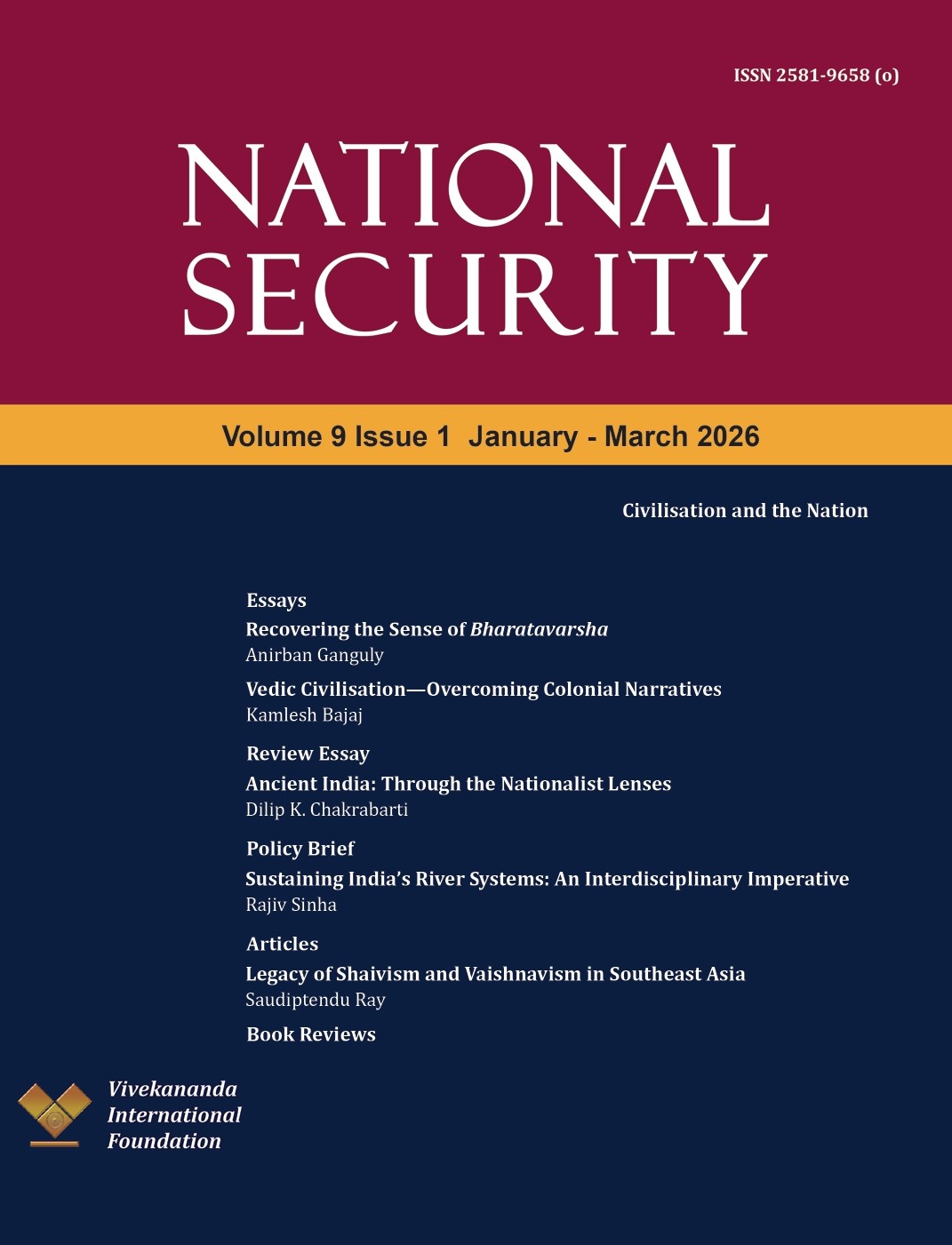

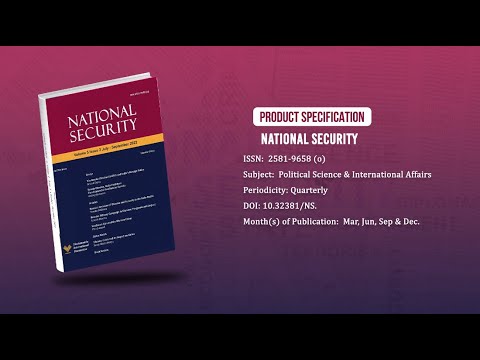
National Security
Published in Association with Vivekananda International Foundation
Current Volume: 9 (2026 )
e-ISSN: 2581-9658
Periodicity: Quarterly
Month(s) of Publication: Mar, Jun, Sep & Dec
Subject: Political Science & International Affairs
DOI: 10.32381/NS
Online access is free for the Research Faculty of VIF
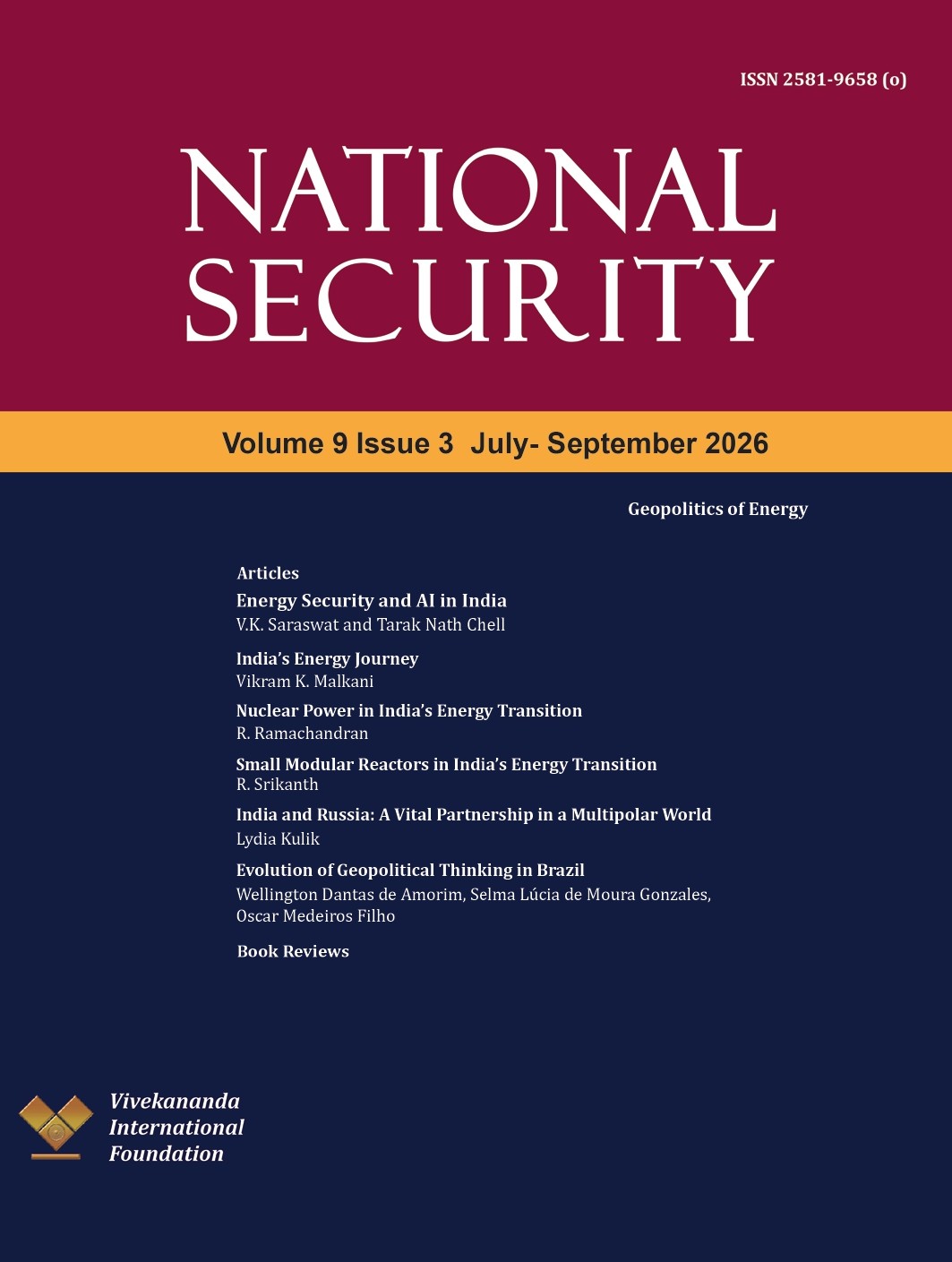
India’s Energy Journey: Transitioning from Scarcity to Security
By : Vikram K. Malkani
Page No: 359-387
Abstract
The Indian government has identified energy security as one of its key priorities to achieve the ambition of making India a developed country (Viksit Bharat) by 2047. From a severely energy-deprived country in 1947, India has made remarkable progress — the country’s per capita energy consumption in 2023 was 128 percent higher than in 1991. However, it continues to be the lowest among the world’s biggest economies. Since the beginning of economic reforms in 1991, India has leveraged its natural resources, technology solutions and imports to produce increasing amounts of fossil fuel energy, even as it has increased renewable energy generation multifold. But India has to cross many milestones in its energy security journey — from implementing deeper and broader reforms, and greater use of technology to balancing geopolitical equations for adequate and uninterrupted imports. To ensure these objectives, India will not only have to work internally on multiple fronts for the next two decades and beyond, but will also need to manage external geopolitical risks
Authors
Vikram K. Malkani has worked as an Information Technology professional for over 30 years, nearly 20 of which were with one of Australia’s largest banks. In recent years, he has focused on writing on India’s socio-economic development based on in-depth data-driven analyses. His research and articles have been published in leading platforms in India and internationally.
DOI: http://doi.org/10.32381/NS.2026.09.03.2