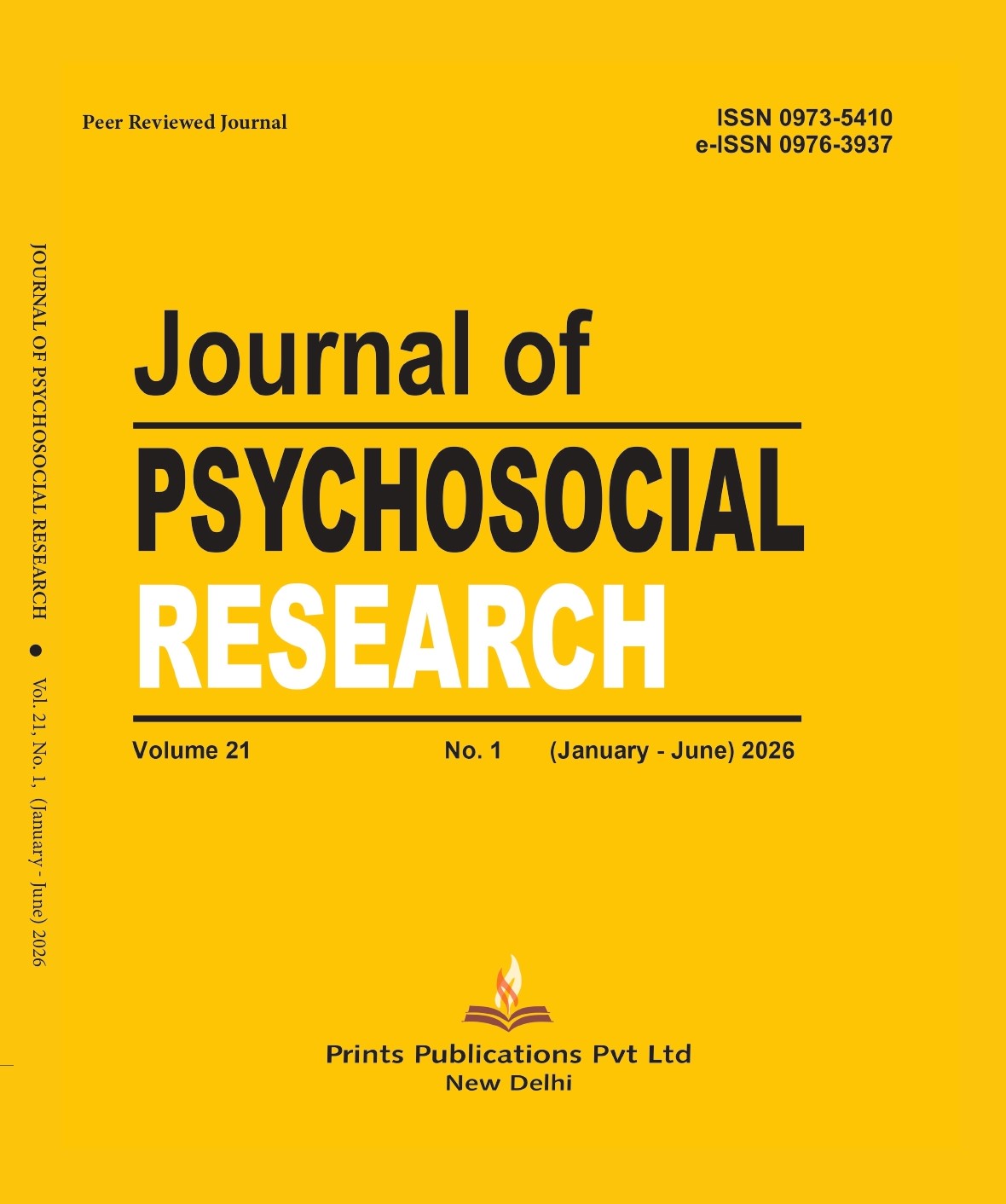



Journal of Psychosocial Research
Current Volume: 21 (2026 )
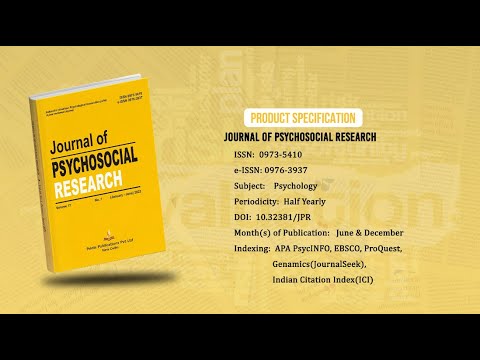
ISSN: 0973-5410
e-ISSN: 0976-3937
Periodicity: Half-Yearly
Month(s) of Publication: June & December
Subject: Psychology
DOI: 10.32381/JPR
Job Satisfaction and Occupational Stress Among Married and Unmarried Health Professionals
By : Shibani Basundhara Mishra , Bhaswati Patnaik
Page No: 313-319
Abstract
Health profession in general is demanding and therefore leads to increased stress among healthcare workers. Global recognition of their contributions has highlighted how job satisfaction impacts occupational stress in these kind of professions. This study examined the influence of marital status on job satisfaction and occupational stress among 60 female health professionals, aged 22-30 years, having similar levels of educational qualification. In the Indian context, career women find it difficult to maintain work-life balance since contribution towards household work is determined primarily by gender role perceptions and stereotypes. In demanding jobs such as in healthcare, married women need to face the challenges of work as well as that of domestic responsibility. Using the tools such as, Satisfaction of Employees in Healthcare (SEHC Aleprm, 2013), and Extended Nursing Stress Scale (ENSS, GrayToft & Anderson, 1981), job satisfaction and occupational stress were assessed respectively in equal number of married and unmarried nurses. It was found that a non-significant difference between married and unmarried participants exists so far as job satisfaction is concerned. However, a significant difference in occupational stress was found with married individual experiencing more stress than their unmarried counterparts. Correlational analysis indicated a negative relationship between job satisfaction and occupational stress. Results indicated the need for work-life balance among healthcare workers.
Authors:
Shibani Basundhara Mishra : Guest Faculty, Department of Psychology, Govt. Women’s College Bhawanipatna, Kalahandi
Bhaswati Patnaik, Professor : Department of Psychology, Utkal University, Vani Vihar, Bhubaneswar
DOI: https://doi.org/10.32381/JPR.2024.19.02.11