


Journal of Indian Ocean Studies
Published in Association with Society of Indian Ocean Studies (SIOS)
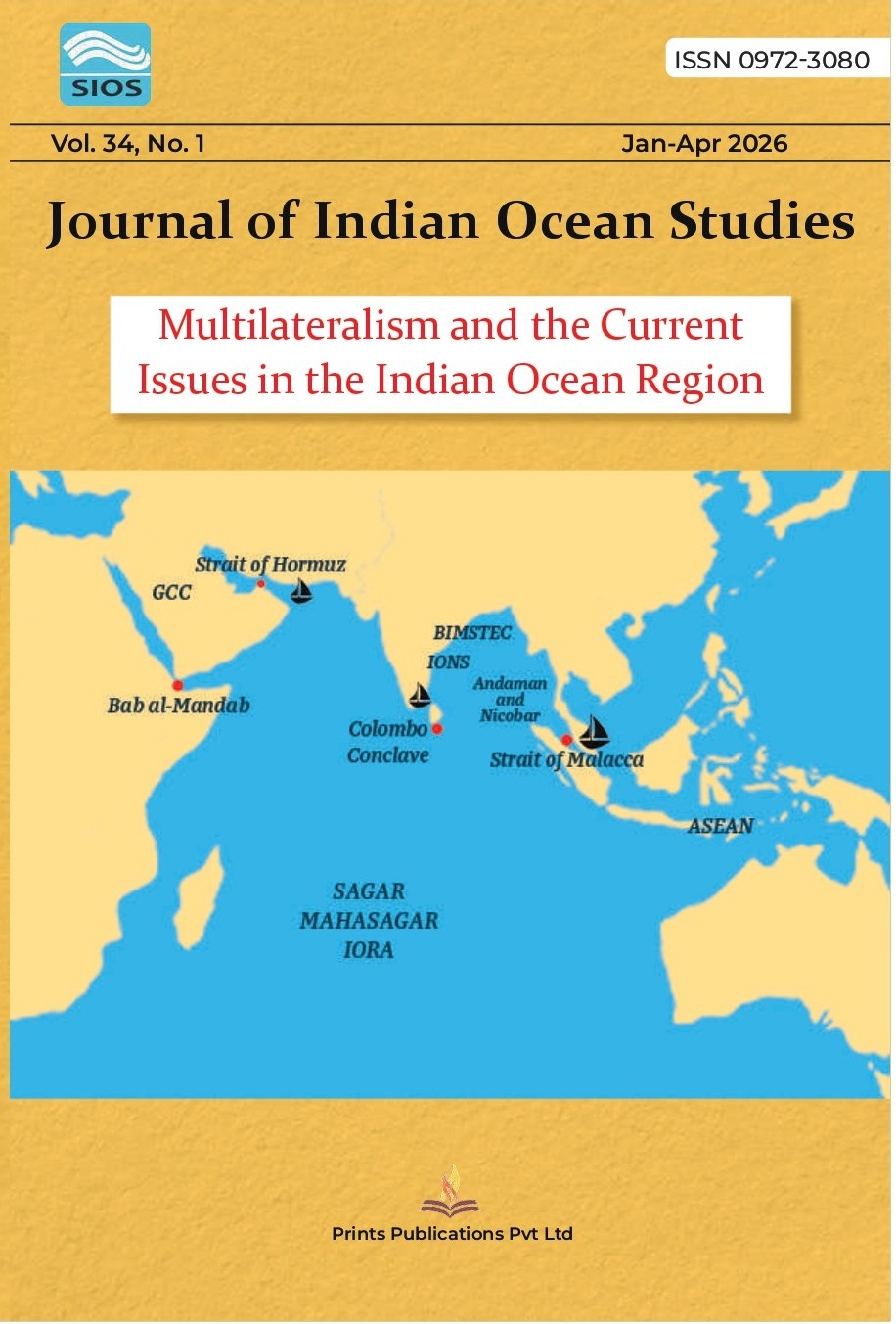
Current Volume: 34 (2026 )
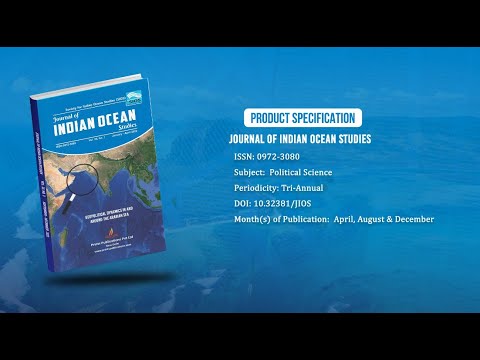
ISSN: 0972-3080
Periodicity: Tri-annual
Month(s) of Publication: April, August & December
Subject: Political Science & International Affairs
DOI: 10.32381/JIOS
Online Access is free for Life Member
Zoning a Peaceful Indian Ocean Region: Navigating Past to Present Contentions
By : Kgame Molope , Josia Moyo
Page No: 101-113
Abstract
The Treaty of Westphalia (1648) remains a significant tool of organising societies in, especially, delineated territories in which the exercise of power lies with a government authority recognised by similar type. Beyond the sovereign territorial expanses, the oceans have not been spared of contentions of influence or dominance. At the end of World War II, the waning of British influence in the Indian Ocean Region inadvertently paved the way for a new struggle for influence between the United States and the Soviet Union. The region, constituted by predominantly smaller and security vulnerable states, was open to the development of a system subject to a prevailing power struggle. For these regional states, the quest for independence, autonomy, peace and security of the region required the pursuit of a path straddling between the two rivals. Moreover, footprints of military presence both before and, especially, after the second world war caused discontentment among littoral states of the Indian Ocean. To date, the region has witnessed increasing expansions of military establishments despite resistance by regional states. The 26th United Nations Resolution 2832(xxvi) on the Indian Ocean as Zone of Peace was a milestone for Indian Ocean regional states. However, it was already marred with controversies on how it will be attainable as it is today. In the Indian Ocean Rim Association, for example, the resolution is a reference point in attempts to address historical vulnerabilities from growing threats. As regional states commit to advancing cooperating for regional common good, they invariably cooperate to intensify vulnerabilities. This article argues, however, that regional states’ cooperative efforts while nominally directed at advancing collective security and common goods - paradoxically risk compounding the very vulnerabilities they seek to resolve. Through a historical and contemporary analysis of strategic contestation in the IOR, this article examines the tensions inherent in pursuing meaningful cooperation toward a Zone of Peace.
Authors
KGame MOLOPE, North West University, South Africa.
Josia Moyo, Eszterházy Károly Catholic University, Hungary.
DOI: https://doi.org/10.32381/JIOS.2026.34.01.8